Could Joseph Smith have written the Book of Mormon?
The question of the authenticity of the Book of Mormon is the basis for any discussion on the truthfulness of the LDS church.
Just as the arch crumbles if the keystone is removed, so does all the Church stand or fall with the truthfulness of the Book of Mormon. The enemies of the Church understand this clearly. This is why they go to such great lengths to try to disprove the Book of Mormon, for if it can be discredited, the Prophet Joseph Smith goes with it.[1]
The Church maintains that the Book of Mormon is of divine origins, and that Joseph Smith, or any other person, was uncapable of inventing a document of such length and complexity.
Overview of LDS position
During his tenure at BYU, Hugh Nibley, a Mormon apologist, issued a challenge to see if any student could compose a history similar to the Book of Mormon (BOM) within the space of a semester,[2] just as Joseph Smith "translated the gold plates in less than three months."[3] Not only that, but the history should never contradict itself, observe appropriate literary conventions, and be lavish with cultural and technical details. (It is reported that no student ever succeeded in his challenge.) The LDS church asserts that for a poorly educated farm boy, this task would be entirely impossible without the power of God.
Overview of Critics' position
The most important point the critics make concerning the writing of the Book of Mormon deals with the possible, the plausible and the probable which can be summarized by this question: What is more probable, that Joseph Smith wrote the book or that a divine being showed a treasure-hunting Joseph of 14 the location of golden plates and then through supernatural use of a scrying with rock in a hat those plates revealed a completely unknown civilization (traces of which still cannot be found)? Critics believe that Occam's razor be used to rule out option 2.
However, this page addresses some additional concerns. First, translation of the Book of Mormon did not take place in less than three months; it spanned a time period of over a year and Joseph may have been working on the text for years before the date reported as when he started.[4] Second, the "most correct of any book on earth" has undergone more than 3,000 textual and grammatical corrections.[5] Some of these corrections included significant changes in doctrine. Third, a large portion of the Book of Mormon simply quotes the Bible, including translation errors unique to the King James Version. Fourth, stories in the Book of Mormon directly parallel stories from Joseph's life, such as his father's dream of the tree of life when Joseph was five years old.[6] Fifth, the Book of Mormon is no more complicated than other works of fiction, such as Tolkien's Lord of the Rings and related works. Finally, the ideas in the Book of Mormon bear strong parallels to ideas popular in New England at the time and several other books. Sixth, Joseph may have had help.
Hugh Nibley's Book of Mormon Challenge as found in "The Translation of the Book of Mormon: A Time of Miracles," by Scot and Maurine Proctor, Meridian Magazine
Members of the LDS Church who have an intellectual testimony of the Church often say they believe in the truthfulness of the Book of Mormon (and therefore the LDS Church) because of the assertion that Joseph Smith could not possibly have written the Book of Mormon. "How could a young farm boy with limited education have written a fairly long, complex, flawless religious text like the Book of Mormon? If Joseph could not have written the book on his own, his story of the golden plates and the angel must be true," they say. (For example, in the Video Guide, Chapter 2, 1 Nephi 9, teachers are instructed to bear their testimony of the Book of Mormon and, "You could also indicate that a book this complex could not have been written by an uneducated young man like Joseph Smith.")
Could someone have written the Book of Mormon without divine help?
Before trying to answer the question of whether or not Joseph could have written the Book of Mormon, let's examine whether anyone in the 19th century could have written such a book. Some LDS assert that no man or woman could have written the Book of Mormon without divine intervention.
Our first response was made in the "Overview of Critics' Position" in the Introduction above: The most important point the critics make concerning the writing of the Book of Mormon deals with the possible, the plausible and the probable which can be summarized by this question: What is more probable, that Joseph Smith wrote the book or that a divine being showed a treasure-hunting Joseph of 14 the location of golden plates and then through supernatural use of a scrying with rock in a hat those plates revealed a completely unknown civilization (traces of which still cannot be found)? Critics believe that Occam's razor be used to rule out option 2.
The first edition of the Book of Mormon
When the Book of Mormon was first published in 1830, it looked very different than today. The text was all in paragraph form. The original Book of Mormon had the appearance of an average 'non-religious' book. The modern Book of Mormon used in the Church looks much more 'biblical' as everything has been put into numbered chapters and verses, cross referenced with footnotes, etc.
The first edition of the Book of Mormon was riddled with grammatical errors. This alone questions whether the text was written by man or translated divinely. There were also several more significant errors in the early editions of the Book of Mormon such as changing the name of King Benjamin to King Mosiah (King Benjamin was already dead at this point) or changing that Mary was the 'mother of God' to the 'mother of the son of God'.
Overall there have been some 3,913 changes to the first edition of Book of Mormon. This is the book Joseph called 'the most correct book on earth'. For more detail on the changes go to: Link is here.
So when determining whether or not Joseph could have written the Book of Mormon, we should actually be looking at the first edition of the Book of Mormon and not the current version we have today which has been altered by people other than Joseph Smith.
How does the Book of Mormon compare to other literary works?
Most non-LDS authors are not all that impressed with the Book of Mormon - certainly no non-LDS authors are so impressed as to even entertain the idea that the book could not have been written by a man without divine help.
Mark Twain thought the Book of Mormon was extremely boring and referred to it as 'chloroform in print'.
The book seems to be merely a prosy detail of imaginary history, with the Old Testament for a model; followed by a tedious plagiarism of the New Testament. The author labored to give his words and phrases the quaint, old-fashioned sound and structure of our King James's translation of the Scriptures; and the result is a mongrel—half modern glibness, and half ancient simplicity and gravity. The latter is awkward and constrained; the former natural, but grotesque by the contrast. Whenever he found his speech growing too modern—which was about every sentence or two—he ladled in a few such Scriptural phrases as "exceeding sore," "and it came to pass," etc., and made things satisfactory again. "And it came to pass" was his pet. If he had left that out, his Bible would have been only a pamphlet. Mark Twain, Roughing It.
Even Assistant Church Historian and General Authority B.H. Roberts objectively stated:
…[T]here is a certain lack of perspective in the things the book relates as history that points quite clearly to an undeveloped mind as their origin. The narrative proceeds in characteristic disregard of conditions necessary to its reasonableness, as if it were a tale told by a child, with utter disregard for consistency…
Is this all sober history…or is it a wonder-tale of an immature mind, unconscious of what a test he is laying on human credulity when asking men to accept his narrative as solemn history.
B. H. Roberts, Studies of the Book of Mormon, ed. Brigham D. Madsen (Urbana: University of Illinois Press, 1985), 251.
In The New Yorker's review of The Lost Book of Mormon (by Avi Steinberg), the author says,
Steinberg rarely quotes directly from the Book of Mormon, which seemed odd until I tried to read it myself. As exciting as the plot sounds in paraphrase, the actual text smothers it in so many King Jamesian locutions that it’s barely discernable. No one’s ever claimed that the Book of Mormon rivals the literary achievements of the Bible or the poetic grace of the Koran in Arabic, but I was still surprised by the tedium.
Slate's review of Understanding the Book of Mormon: A Reader's Guide, by Grant Hardy, says,
Whatever one's views on the authenticity of the text, it has been widely regarded as a rather inferior work of literature, especially when compared to the King James Bible. "Chloroform in print," is Mark Twain's famous dismissal of it.
I found myself willing—indeed eager—to go along with Hardy's suggestion. Mormonism has fascinated me ever since I developed an interest in religion. …If someone can convince me that the reason for Mormonism's success lies in the narrative structure of its sacred text, I am willing to be convinced.
Hardy concludes his book by citing Twain's famous quip that Wagner's music "is better than it sounds." the Book of Mormon, he wants us to believe, is better than it reads. Here is where he loses me. I can get so absorbed in an opera like Siegfried that when it ends, six or so hours after it began, I cannot wait until the next one in the Ring, Die Götterdämmerung, starts. The same thing simply cannot be said about the Book of Mormon, at least to a non-Mormon like me. Hardy's heroic efforts to prove that there is literature somewhere buried in all those passages starting with "Behold" or "And so it came to pass" leave me, like Twain, gasping for air. Hardy does convince me that writing the Book of Mormon required an amazing amount of dedication. How else to explain its length and the fervent imagination clearly at work within it. He has not convinced me that what was written qualifies as great, or even good.
Mormonism's success suggests that a religion can flourish in spite of rather than because of its founding texts. I do not doubt that Mormons are inspired by the words associated with Joseph Smith. But if another reference to music is permitted, I simply cannot imagine anyone setting those words to music the way Handel did with the Bible in his oratorios. the Book of Mormon has a structure. It does not sing.
the Book of Mormon pales in comparison to such literary masterpieces as A Tale of Two Cities by Charles Dickens, War and Peace by Leo Tolstoy or anything by William Shakespeare. Many books are far more complex and difficult to write than the Book of Mormon. In Tolkien's fictional Lord of the Rings series, not only are multiple interacting civilizations created, but also their own languages.
the Book of Mormon is not so spectacular of a book that it could only have been written with divine intervention—many authors in Joseph Smith's day could have written it. However, it's one thing to say a trained author could have written the Book of Mormon, and quite another to say Joseph Smith could have written it. So, could Joseph Smith have produced the book without divine help?
When the Book of Mormon was first published, Joseph claimed that a revelation told him to sell the copyright to the Book of Mormon to a publishing company in Canada to earn money; it was treated like any other book written by an author, as if there was nothing special about it. Hiram Page and Oliver Cowdery went to Toronto for this purpose, but they failed to sell the copyright, returning without any money. (Revelation, circa Early 1830, ID #6473, The Joseph Smith Papers)
It should be noted that the first edition of the Book of Mormon has listed on its title page that Joseph Smith is the "author and proprietor" of the book, but the Preface of the same edition states that Joseph translated it. Subsequent editions changed the term "author and proprietor" to "translator." The word "author" is used by some critics to claim that Joseph admitted to having written the book on his own. However, this MT editor believes the reason "author and proprietor" was included was to comply with copyright laws of the time, and not an indication that Joseph was claiming to have written it on his own. See the then-existent copyright laws (1790) that frequently used the term "author or proprietor."
Joseph Smith was born on December 23, 1805 in Sharon, Vermont to Joseph and Lucy Mack Smith. He grew up on a series of farms in Vermont, New Hampshire, and New York. Although the LDS church has painted a picture of Joseph Smith as an uneducated farm boy, he was home schooled quite extensively in "reading, writing, and the ground rules of arithmetic," as his mother put it.
According to Joseph's mother, even from an early age, it is apparent that Joseph was not a typical boy, but possessed some qualities and mannerisms that seemed beyond his years. Some Mormons know about Joseph's terrible operation on his leg at age seven. Infected bone was cut from his swollen and infected lower leg without any anesthesia. Joseph's mother reported the incident in her writings:
The principal surgeon, after a moment's conversation, ordered cords to be brought to bind Joseph fast to a bedstead; but to this Joseph objected. The doctor, however, insisted that he must be confined, upon which Joseph said very decidedly, "No, doctor, I will not be bound, for I can bear the operation much better if I have my liberty." "Then," said Dr. Stone, "will you have some brandy?…"
"No," exclaimed Joseph, "I will not touch one particle of liquor, neither will I be tied down; but I will tell you what I will do—I will have my father sit on the bed and hold me in his arms, and then I will do whatever is necessary in order to have the bone taken out." Looking at me, he said, "Mother I want you to leave the room, for I know you cannot bear to suffer so; father can stand it, but you have carried me so much, and watched over me so long, you are almost worn out." Then looking up into my face, his eyes swimming in tears, he continued, "Now, mother, promise me that you will not stay, will you? The Lord will help me, and I shall get through with it."
That manner of speech and control is certainly not typical for a seven-year-old child. Even at that tender age, it appears Joseph had the verbal skills and some influence over those much older than he. Although Joseph survived the operation quite well, he walked with a limp from that day forward. A few LDS depictions will show Joseph with a limp and occasionally using a cane.
It is apparent in our studies of Joseph Smith that he had academic strengths and weaknesses. We would describe Smith as creative, articulate, and well-read. By his early teens, he had quite a thorough knowledge of The Holy Bible and many other books. Although well-read beyond average, he appeared weak in areas such as writing and grammar and, of course, in formal education subjects such as the sciences and mathematics.
Joseph's education
Joseph Smith had a limited formal education which is often used as a reason why he could not have written the Book of Mormon. However, just because his formal schooling was limited, that does not mean he did not have the mental acumen to produce a work like the Book of Mormon.
Education was important to the Smith family, and although Joseph may have only had limited formal education in a typical classroom, his parents undoubtedly schooled him at home. Joseph's mother wrote that they did not neglect the education of their children. This was an educated family: Joseph's father, Joseph Smith, Sr., was a school teacher during the off season. Joseph's brother, Hyrum, worked as a school teacher during the off season also. His mother and maternal grandmother were school teachers. One of his sisters may have also been a teacher at some point in her life. Joseph attended school when he was about 20 years old in Harmony, PA with the Stowell children. According to his own words, Joseph read and pondered scriptures. He had access to books and newspapers. He even held a position as "exhorter" at a local church and participated in the debate group in Palmyra.
Despite limited schooling Joseph Smith loved to study and learn. In part he was influenced by schoolteacher associates. His father once taught school. His maternal grandmother, a schoolteacher, taught his mother the rudiments of 'sums, 'write-o-hand' and spelling.' Joseph's wife was a schoolteacher, 'a woman of liberal culture and insistent on education.' And his primary scribe during the translating of the Book of Mormon was schoolteacher Oliver Cowdery.
In the early 1800s few children were able to have a full education. Most children in rural America worked on farms and often had much of their education done at home. As Joseph Smith Sr. was an actual school teacher at various times in his life, he would be quite capable of teaching general education to his children, including Joseph. Joseph's mother, Lucy Smith, would undoubtedly help as well.
Even Abraham Lincoln had a very limited formal education, and Benjamin Franklin also had only one year of formal education. Look at the amazing things they wrote and accomplished.
Today, many people home-school their children—are they to be considered uneducated? It's true that they do not have a "formal" education, but for the most part, home-schooled children have similar, and in some cases superior, education than traditionally-schooled children.
Religious education
Young Joseph was able to read and ponder scriptures. Joseph also attended Protestant church services and apparently studied the Bible in depth. According to Lucy Mack Smith, Joseph's mother, less than a year after first being visited by Moroni, Joseph said:
Mother, I do not wish to prevent your going to [church], or any of the rest of the family; or your joining any church you please; but, do not ask me to join them. I can take my Bible, and go into the woods and learn more in two hours than you can learn at meeting in two years, if you should go all the time.
Critic's comment: One has to wonder why a document translated in the 19th century uses 17th century English. Although, if Joseph was so well acquainted with the Bible, it may help explain why the Book of Mormon is so similar to the Bible. The English used in the 1830s certainly didn't match the Book of Mormon language. The "thees" and "thous" seem included so as to make the book sound more scripture-like. Additionally, why is the translation so inconsistent: sometimes "you" was used and other times "thou" was used; "shown" vs. "shewn;" "had" vs. "hath;" etc. Did Reformed Egyptian actually use two different words, one modern and one archaic, to mean the same thing? Does the Book of Mormon consistently use the different words in different contexts, or is it arbitrary? It must be noted that the bible also has the same issue.
Michael Quinn has made the best case for Joseph Smith's information environment. Joseph knew the Bible, Camp meetings, American antiquities, strategies of the war of 1812 and earlier American/Indian wars, and the strong anti-Masonic sentiments between 1826-1830 in his environment (Hyrum Smith was a Mason in NY, and belonged to a lodge.) In other words, the very things that Joseph was most "schooled" in he had observed from his own backyard and were the very things we find discussed in the Book of Mormon.
The poor grammar in the 1830 Book of Mormon shows the lack of formal education that Joseph had. However, lack of education does not mean lack of intelligence or imagination. The original grammar and the errors in the Book of Mormon is what would be expected from someone with limited formal education (but not if the words were given to him by the power of God in the manner in which it is claimed to have happened—word for word and, according to Martin Harris, "if not written correctly it remained until corrected."). An example of Joseph's writing from before he published the Book of Mormon is in the section below 'What about Emma Smith?'
William E. McLellin, a schoolteacher, said of Joseph as an adult learner:
He attended my High school during the winter of 1834. He attended my school and learned science all winter. I learned the strength of his mind as <to> the study and principles of science. Hence I think I knew him. And I here say that he had one of <the> strongest, well balanced, penetrating, and retentive minds of any <man> with which <whom> I ever formed an acquaintance, among the thousands of my observation. Although when I took him into my school, he was without scientific knowledge or attainments.
Additional information and source material for some of the above points.
In his own handwriting, Joseph Smith claimed that by the age of twelve he spent time not just reading, but "searching the scriptures" and "applying [himself] to them." He knew them well enough that he could judge that the people he personally knew did not behave "agreeable to what I found contained in" the bible. "From the age of twelve years to fifteen," Joseph "pondered many things…of the world of mankind." But "by searching the scriptures [he] found that mankind did not come unto the Lord but they had apostatised from the true and liveing faith and there was no society or denomination that built upon the gospel of Jesus Christ as recorded in the new testament."
Also, through "searching the scriptures," Joseph said he "felt to mourn for my own sins and for the sins of the world;" knew that "God was the same yesterday to day and forever" and that "he was no respecter to persons for he was God…"
Full quote:
…we were deprived of the bennifit of an education suffice it to say I was mearly instructtid in reading writing and the ground rules of Arithmatic which constituted my whole literary acquirements. At about the age of twelve years my mind become seriously imprest with regard to the all importent concerns for the wellfare of my immortal Soul which led me to searching the scriptures believeing as I was taught, that they contained the word of God thus applying myself to them and my intimate acquaintance with those of differant denominations led me to marvel excedingly for I discovered that they did not adorn their profession by a holy walk and Godly conversation agreeable to what I found contained in that sacred depository this was a grief to my Soul thus from the age of twelve years to fifteen I pondered many things in my heart concerning the sittuation of the world of mankind the contentions and divisions the wickedness and abominations and the darkness which pervaded the minds of mankind my mind become excedingly distressed for I become convicted of my sins and by searching the scriptures I found that mankind did not come unto the Lord but they had apostatised from the true and liveing faith and there was no society or denomination that built upon the gospel of Jesus Christ as recorded in the new testament and I felt to mourn for my own sins and for the sins of the world for I learned in the scriptures that God was the same yesterday to day and forever that he was no respecter to persons for he was God for I looked upon the sun the glorious luminary of the earth and also the moon rolling in their magesty through the heavens and also the stars shining in their courses and the earth also upon which I stood and the beast of the field and the fowls of heaven and the fish of the waters and also man walking forth upon the face of the earth in magesty and in the strength of beauty whose power and intiligence in governing the things which are so exceding great and marvilous even in the likeness of him who created them and when I considered upon these things my heart exclaimed well hath the wise man said it is a fool that saith in his heart there is no God my heart exclaimed all all these bear testimony and bespeak an omnipotant and omnipreasant power a being who makith Laws and decreeeth and bindeth all things in their bounds who filleth Eternity who was and is and will be from all Eternity to Eternity and when I considered all these things and that that being seeketh such to worshep him as worship him in spirit and in truth therefore I cried unto the Lord for mercy for there was none else to whom I could go and obtain mercy…
Letterbook 1, The Joseph Smith Papers, p. 7. Spelling retained. Emphasis added.
During this period, Joseph, Senior, worked on the farm summers, and taught school part of the time winters. His son Joseph attended the school on Dewey Hill, and was taught his letters by Dea[con] Jonathan Kinney, the schoolmaster there.
Father Smith taught common school for several winters while the Smiths lived in the Prophet's birthplace. But young Joseph was not ready for regular instruction until after his family had moved to neighboring Royalton Township, where Joseph Smith Sr. appears on the tax records from 1809 to 1811. A granddaughter of Royalton deacon Jonathan Kinney said he "oft repeated" that "I taught Joseph Smith, the Mormon prophet, his letters while teaching school upon Dewey Hill about the year 1810-15."
From 1812-13, while living in Lebanon, New Hampshire, Joseph Sr. and Lucy sent their children to school, until, apparently, the typhoid fever outbreak of 1813:
…as my children had been deprived of school we made every arrangement to suply that deficency our second son we sent to the accademy in Hanover the remmainder who were old enough [which would include Joseph, then 6 or 7] attended a school near by whilst I their Father and myself were industriously laboring late and early to do all in our power for their future wellfare We met with success on every hand[.]
By Lucy Mack Smith, first draft as found in Lucy's Book, Edited by Lavina Fielding Anderson. Signature Books, (2001).
Someone familiar with the Smith family when they lived in Palmyra, New York, recollected the following in 1851:
Joseph had a little ambition, and some very laudable aspirations; the mother's intellect shone out in him feebly, especially when he used to help us solve some portentous questions of moral or political ethics in our juvenile debating club, which we moved down to the old red schoolhouse on Durfee street, to get rid of the critics that used to drop in upon us in the village. And subsequently, after catching a spark of Methodism in the camp meeting, away down in the woods, on the Vienna road, he was a very passable exhorter in the evening meetings.
Herbert S. Salisbury, grandson of Joseph Smith, Jr.'s sister, Katherine Smith Salisbury, said the following about Joseph Smith:
The enemies of the Prophet Joseph Smith accuse him of being an ignorant young man at the time he received the first revelation. The defenders of the church have exaggerated his lack of learning. …
He was not as ignorant as his enemies would have us believe, anyhow. I have his New England Reader, used by him in school, and afterwards by his sister Catherine, who gave it to me, and it would take some of our college and university men to fully appreciate its lofty sentiment, expressed in the sesquipedal verbiage of the noted scholars and writers of the great Puritan age, from Milton up to the beginning of our Constitutional Period.
He, and many of the early church men, were the product of the best Puritan stock, with whom education was one of the first considerations. Joseph Smith, jr.'s, maternal grandmother, Lydia Gates Mack, was a school-teacher and taught his mother. Joseph Smith, sr., was a public-school teacher in Royalton, Vermont. His wife, Emma Hale, was also a school-teacher, a woman of liberal culture and insistent on education. Inasmuch as New England had enjoyed free public schools for nearly two centuries before Joseph Smith appeared upon the stage of action, and in light of the fact that his immediate ancestors were people of high rank in Massachusetts, and of the teaching profession, it is unreasonable to suppose that he had absolutely no common education.
Besides his ability to read and think about the bible, Joseph could write. Although he felt a need to have a scribe to help with the Book of Mormon, Joseph had good penmanship. His spelling and punctuation may not have been the best, but he could compose and write, as the already quoted 1832 history attests. To see his penmanship, see his 1832 history and also his letter to his wife, Emma, June 6, 1832
These writings were a mere 3-4 years after the writing of the Book of Mormon. It could be that in those years Joseph had learned to write, but more likely than not he was already a capable writer when the Book of Mormon was penned.
Although apparently aided by an angelic being with the content (Moroni), Joseph was capable of telling stories as a 16 year old:
In the course of our evening conversations Joseph would give us some of the most ammusing recitals which could be immagined he would describe the ancient inhabitants of this continent their dress thier maner of traveling the animals which they rode The cities that were built by them the structure of their buildings with every particular of their mode of warfare their religious orship-as particularly as though he had spent his life with them[.]
By Lucy Mack Smith, first draft as found in Lucy's Book, Edited by Lavina Fielding Anderson. Signature Books, (2001).
It is not implausible for those with little to no formal education to be intelligent and creative individuals. The following are several examples of such people from approximately the same time period as Joseph Smith.
[Abraham] Lincoln's education was typical, fulfilling Joseph Kett's image of adolescents practicing "a mixture of formal schooling and private self-education." Lincoln reminisced that "the aggregate of his schooling did not amount for one year." Instead, he joined several self-improvement groups, including the New Salem Debating Society and the Springfield Lyceum. By and large, however, self-education was solitary, even secretive.
Self-education, however, was a rare achievement in a pioneer culture, even one on the verge of a commercial revolution. Like most farmboys, Lincoln received little encouragement from his family to forego manual labor to read and think. Back in Indiana, for example, his love of reading and writing earned him little more than a reputation for laziness. John Romine, who hired the boy, recalled that "Abe was awful lazy: he worked for me-was always reading&thinking-used to get mad at him." Lincoln's second cousin Dennis Hanks remembered that "Lincoln was lazy-a very lazy man-He was always reading-scribbling-writing-Ciphering-writing Poetry &c. &c." Even in Illinois, Lincoln's solitary reading habits earned him an unflattering reputation. Stephen T. Logan, cousin of Mary Todd and later Lincoln's law partner, heard about the lazy young newcomer and later reminisced that "The impression that I had at the time was that he was a sort of loafer." Only much later did anyone recognize this diligent reading, thinking, and writing as hard work, in fact a new kind of labor, mental work.
Horace Greeley was born on February 3, 1811, on a farm about five miles from Amherst, New Hampshire. He could not breathe for the first twenty minutes of his life. It is suggested that this deprivation may have caused him to develop Asperger's syndrome-some of his biographers, such as Mitchell Snay, maintain that this condition would account for his eccentric behaviors in later life.
Greeley was the son of poor farmers Zaccheus and Mary (Woodburn) Greeley. Zaccheus was not successful, and moved his family several times, as far west as Pennsylvania. Horace attended the local schools, and was a brilliant student…
Seeing the boy's intelligence, some neighbors offered to pay Horace's way at Phillips Exeter Academy, but the Greeleys were too proud to accept charity. In 1820, Zaccheus's financial reverses caused him to flee New Hampshire with his family lest he be imprisoned for debt, and settle in Vermont. Even as his father struggled to make a living as a hired hand, Horace Greeley read everything he could-the Greeleys had a neighbor who let Horace use his library. In 1822, Horace ran away from home to become a printer's apprentice, but was told he was too young.
In 1826, at age 15, he was made a printer's apprentice…
In later life Horace Greeley started the New-York Tribune (1841-1966) and was influential in journalism in general. He was a US Congressman and helped start the Republican Party.
Samuel [Clemen]'s father was a judge, and he built a two-story frame house at 206 Hill Street in 1844. As a youngster, Samuel was kept indoors because of poor health. However, by age nine, he seemed to recover from his ailments and joined the rest of the town's children outside. He then attended a private school in Hannibal.
When Samuel was 12, his father died of pneumonia, and at 13, Samuel left school to become a printer's apprentice. After two short years, he joined his brother Orion's newspaper as a printer and editorial assistant. It was here that young Samuel found he enjoyed writing.
Essay: “Reassessing Joseph Smith Jr.’s Formal Education”
Anyone interested in knowing just how much formal schooling Joseph Smith had should read Bill Davis’ essay “Reassessing Joseph Smith Jr.’s Formal Education” in the latest issue of Dialogue: A Journal of Mormon Thought (Winter 2016). It is a year-by-year assessment of the documentary evidence, and while an exact number is not possible due to the incompleteness of the sources, Bill can show that “the overall estimated time that Joseph spent in formal education to the equivalent of approximately seven full school years—a notable increase to that proposed in previous historical representations ....” This does not include instruction he probably received from his teacher father and brother Hyrum. I highly recommend Bill’s well-researched and reasoned essay.
Dan Vogel
Joseph's age
We've heard many times that it's impossible for a young boy to have written the Book of Mormon. Although the Church doesn't teach this, many members mistakenly confuse the age of Joseph when he translated the Book of Mormon with the age Joseph was when he had the First Vision at age 14 or 15. The first edition of the Book of Mormon was published in 1830 when Joseph was 24. So Joseph was in his early to mid twenties when the Book of Mormon was translated and not a teenager. Many authors have written very impressive works and were younger than when Joseph translated the Book of Mormon such as Ernest Hemingway. See below for examples of extraordinary accomplishments by people younger than Joseph was when he translated the Book of Mormon.
Joseph's imagination
Critics often say that young Joseph was known for story-telling and often cite the following account from Joseph's mother:
During our evening conversations, Joseph would occasionally give us some of the most amusing recitals that could be imagined. He would describe the ancient inhabitants of this continent, their dress, mode of travelings, and the animals upon which they rode; their cities, their buildings, with every particular; their mode of warfare; and also their religious worship. This he would do with as much ease, seemingly, as if he had spent his whole life among them.
However, as we're an organization that promotes total fairness, we must point out that although this is a true quote, it is not the complete quote. LDS apologists contend that the knowledge came from Joseph's encounters with Moroni and not from his imagination.
So we will show the entire account as provided by Assistant Church historian, LDS apologist and General Authority B.H. Roberts who suggests that Joseph could not have learned any of these things from Moroni:
THE IMAGINATIVE MIND OF PROPHET JOSEPH SMITH: EVIDENCE OF ITS EXISTENCE-EXAMPLES OF ITS FORCE
One other subject remains to be considered in this division of the "study" here conducted, viz.-was Joseph Smith possessed of a sufficiently vivid and creative imagination as to produce such a work as the Book Mormon from such materials as have been indicated in the preceding chapters-from such common knowledge as was extant in the communities where he lived in his boyhood and young manhood; from the Bible, and more especially from the View of the Hebrews, by Ethan Smith? That such power of imagination would have to be of a high order is conceded; that Joseph Smith possessed such a gift of mind there can be no question.
The fact of it is first established by the testimony of the mother who bore him, Lucy Smith. Speaking of the days immediately following the revelation making known the existence of the Book of Mormon to her son-the ever memorable 23rd day of September, 1823-Lucy Smith in her History of the Prophet Joseph Smith, recounts how in the evening of that day, the young prophet sat up late detailing to the family the wonderful conversations he had with the angel; until the elder brother, Alvin, noting how exhausted the youthful prophet was suggested an adjournment of the story being related until the following evening. And this was done. This seems to have been the inauguration of a long series of such evenings according to the History by "Mother Lucy Smith" for she writes:
"From this time forth, Joseph continued to receive instructions from the Lord, and we continued to get the children together every night evening, for the purpose of listening while he gave us a relation of the same. I presume our family presented an aspect as singular as any that ever lived upon the face of the earth-all seated in a circle, father, mother, sons and daughters, and giving the most profound attention to a boy, eighteen years of age, who had never read the Bible through in his life; he seemed much less inclined to the perusal of books than any of the rest of our children, but far more given to meditation and deep study..During our evening conversations, Joseph would occasionally give us some of the most amusing recitals that could be imagined. He would describe the ancient inhabitants of this continent, their dress, mode of traveling, and the animals upon which they rode; their cities, their buildings, with every particular; their mode of warfare; and also their religious worship. This he would do with as much ease, seemingly, as if he had spent his whole life among them." (History of the Prophet Joseph, 1901 edition, Salt Lake City, Utah. Published under the sanction and direction of the late President Joseph F. Smith).
It must be remembered that the above took place before the young prophet had received the plates of the Book of Mormon: these were the evenings immediately following the first interviews with Moroni. Whence came his knowledge for these recitals of "the dress," "the mode of the ancient inhabitants of America of traveling," "the animals on which they rode," "their cities," "their buildings," "their mode of warfare," "their religious worship"? And all this given "with as much ease, seemingly, as if he had spent his whole life among them"? Whence indeed, since all this happened before even the second interview with Moroni had taken place, and between three and four years before the translation of the Book of Mormon began.
And yet it must be from that book that he would get his knowledge of the ancient inhabitants of America, unless he has caught suggestions from such common knowledge, or that which was taken for "knowledge," as existed in the community concerning ancient American civilization, and built by imagination from this and possible contact with Ethan Smith's View of the Hebrews his description of the ancient inhabitants of the land, their life, religion and customs. A year later he will be helped by Josiah Priest's book, The Wonders of Nature and Providence, published only twenty miles away, and it will have much to say about the Hebrew origin of the American Indian, and his advanced culture and civilization. Whence comes the young prophet's ability to give these descriptions "with as much ease as if he had spent his whole life" with these ancient inhabitants of America? Not from the Book of Mormon, which is, as yet, a sealed book to him; and surely not from Moroni, since he had had but one day and night of interviews with him, during which there had be several interviews, it is true, but these had been occupied with other subject matter than the things enumerated by Lucy Smith. These evening recitals could come from no other source than the vivid, constructive imagination of Joseph Smith, a remarkable power which attended him through all his life. It was as strong and varied as Shakespeare's and no more to be accounted for than the English Bard's.
Chapter XIV, Studies of the Book of Mormon, B.H. Roberts, pp 243-244.
B.H. Roberts Conclusion
In his book Studies of the Book of Mormon, Roberts concluded that Joseph Smith had sufficient imagination and was capable of producing the Book of Mormon even though he had little formal education. He was, however, prone to make silly mistakes, such as: 1) evidence of an undeveloped mind, 2) repetition of the same themes, 3) repetition of the same villains, 4) repetition of same battles and wars, 5) conversions typical of 19th century conversions.
In light of this evidence, there can be no doubt as to the possession of a vividly strong, creative imagination by Joseph Smith, the Prophet. An imagination, it could with reason be urged, which, given the suggestions that are to be found in the 'common knowledge' of accepted American Antiquities of the times, supplemented [sic] by such a work as Ethan Smith's, View of the Hebrews, would make it possible for him to create a book such as the Book of Mormon is.
… There is a certain lack of perspective in the things the book relates as history that points quite clearly to an undeveloped mind as their origin, The narrative proceeds in characteristic disregard of conditions necessary to its reasonableness, as if it were a tale told by a child, with utter disregard for consistency…
Is this all sober history…or is it a wonder-tale of an immature mind, unconscious of what a test he is laying on human credulity when asking men to accept his narrative as solemn history."
… was Joseph Smith possessed of a sufficiently vivid and creative imagination as to produce such a work as the Book of Mormon from such materials as have been indicated in the preceding chapters …? That such power of imagination would have to be of a high order is conceded; that Joseph Smith possessed such a gift of mind there can be no question.
Studies of the Book of Mormon, B.H. Roberts, p. 243.
Book of Mormon – evidences of other sources
Editor's Note:
The following are ideas as to how Joseph Smith may have used available sources while writing the Book of Mormon. Some of these ideas are more probable sources than others, although none of them are a silver bullet. MormonThink does not necessarily believe any of these sources were actually used; we merely present them to show there other possibilities for the genesis of the Book of Mormon besides just a supernatural explanation.
From time to time the word "plagiarized" is used to describe Joseph Smith's writing of the book of Mormon. It must be kept in mind that there is a difference between the plagiarism of words and that of ideas. Although some critics believe Joseph Smith took actual words from various sources (most definitely from the Bible, and some believe other sources), this editor believes it is more likely that he was informed by the ideas expressed in other writing and simply the climate of his time and place, so while interesting, the parallels presented between the Book of Mormon and other writings of his day do not necessarily prove Joseph plagiarised words.
Lucy Mack Smith reported that her husband, Joseph Smith Sr., had the following dream when Joseph Smith Jr. was 5 years old:
"I thought," said he, "I was travelling in an open, desolate field, which appeared to be very barren. As I was thus travelling, the thought suddenly came into my mind that I had better stop and reflect upon what I was doing, before I went any further. So I asked myself, 'What motive can I have in travelling here, and what place can this be?' My guide, who was by my side, as before, said, 'This is the desolate world; but travel on.' The road was so broad and barren that I wondered why I should travel in it; for, said I to myself, 'Broad is the road, and wide is the gate that leads to death, and many there be that walk therein; but narrow is the way, and straight is the gate that leads to everlasting life, and few there be that go in thereat.' Travelling a short distance further, I came to a narrow path. This path I entered, and, when I had travelled a little way in it, I beheld a beautiful stream of water, which ran from the east to the west. Of this stream I could see neither the source nor yet the termination; but as far as my eyes could extend I could see a rope, running along the bank of it, about as high as a man could reach, and beyond me was a low, but very pleasant valley, in which stood a tree such as I, had never seen before. It was exceedingly handsome, insomuch that I looked upon it with wonder and admiration. Its beautiful branches spread themselves somewhat like an umbrella, and it bore a kind of fruit, in shape much like a chestnut bur, and as white as snow, or, if possible, whiter. I gazed upon the same with considerable interest, and as I was doing so, the burs or shells commenced opening and shedding their particles, or the fruit which they contained, which was of dazzling whiteness. I drew near, and began to eat of it, and I found it delicious beyond description. As I was eating, I said in my heart, 'I cannot eat this alone, I must bring my wife and children, that they may partake with me.' Accordingly, I went and brought my family, which consisted of a wife and seven children, and we all commenced eating, and praising God for this blessing. We were exceedingly happy, insomuch that our joy could not easily be expressed. While thus engaged, I beheld a spacious building standing opposite the valley which we were in, and it appeared to reach to the very heavens. It was full of doors and windows, and they were all filled with people, who were very finely dressed. When these people observed us in the low valley, under the tree, they pointed the finger of scorn at us, and treated us with all manner of disrespect and contempt. But their contumely we utterly disregarded. I presently turned to my guide, and inquired of him the meaning of the fruit that was so delicious. He told me it was the pure love of God, shed abroad in the hearts of all those who love him, and keep his commandments. He then commanded me to go and bring the rest of my children. I told him that we were all there. 'No,' he replied, 'look yonder, you have two more, and you must bring them also.' Upon raising my eyes, I saw two small children, standing some distance off. I immediately went to them, and brought them to the tree; upon which they commenced eating with the rest, and we all rejoiced together. The more we eat, the more we seemed to desire, until we even got down upon our knees, and scooped it up, eating it by double handfulls. After feasting in this manner a short time, I asked my guide what was the meaning of the spacious building which I saw. He replied, 'It is Babylon, it is Babylon, and it must fall. The people in the doors and windows are the inhabitants thereof, who scorn and despise the Saints of God, because of their humility.' I soon awoke, clapping my hands together for joy."
Reference:Lucy's Book, edited by Lavina Fielding Anderson, Chapter 2, pp. 297-98.
Critic's comment: This is the "Tree of Life" story as told in the Book of Mormon starting in 1 Nephi 11:25. If Lucy recalled Joseph Sr.'s dream with this much detail in 1844-45 (when she wrote the first draft of the above quote), one must assume that Joseph Sr. told it many times. Surely Joseph Jr. was well-acquainted with it when he wrote the Book of Mormon. Although faithful LDS try to explain this as evidence that Joseph's father was also inspired, there is another more plausible explanation: Joseph Jr. simply incorporated this dream experience, that had such an impact on his father, into the Book of Mormon.
Many parts of the Book of Mormon are identical to the Bible. Entire chapters of the Bible are contained within the Book of Mormon. Plagiarism is not difficult for anyone to do.
LDS faithful say that there are a couple of reasons for this. The first one is that the Book of Mormon peoples had the Old Testament writings, that they had taken with them from Jerusalem, so there isn't a problem in quoting Old Testament prophets like Isaiah as the Book of Mormon prophets had the Old Testament. Another reason is that these stories were on the plates because the same experiences that happened in the Americas also happened in Jerusalem. For example, since Christ taught the 'sermon on the mount' to the Jews, he would also teach that same exact message to the Nephites as it's the same gospel.
Problems with portions of the Bible in the Book of Mormon
The King James version of The Holy Bible has some translation problems with it as stated in the Articles of Faith. These translation errors occurred when the original Greek and Hebrew Bibles were translated into English. Obviously if the Book of Mormon used the Old Testament records that the Nephites brought with them from Jerusalem in 600 BC, then they would not have English translation errors made in the Middle Ages.
However the Book of Mormon has these same errors. The Bible has some rare errors such as plurals of certain words. The portions of the Book of Mormon that appear to quote the Bible have these same errors. Also the term 'Lucifer' was translated incorrectly in the Bible and was also used in the same incorrect manner as in the King James Bible.
Some LDS apologists admit that Joseph must have used the King James Bible when bringing forth the Book of Mormon. They explain that when Joseph recognized parts of the plates that were identical to the Bible, he used the Bible instead, as expressed in the Ensign:
In fact, the language in the sections of the Book of Mormon that correspond to parts of the Bible is quite regularly selected by Joseph Smith, rather than obtained through independent translation. For instance, there are over 400 verses in which the Nephite prophets quote from Isaiah, and half of these appear precisely as the King James version renders them. Summarizing the view taken by Latter-day Saint scholars on this point, Daniel H. Ludlow emphasizes the inherent variety of independent translation and concludes: “There appears to be only one answer to explain the word-for-word similarities between the verses of Isaiah in the Bible and the same verses in the Book of Mormon.” That is simply that Joseph Smith must have opened Isaiah and tested each mentioned verse by the Spirit: “If his translation was essentially the same as that of the King James version, he apparently quoted the verse from the Bible.” 31 Thus the Old Testament passages from Isaiah display a particular choice of phraseology that suggests Joseph Smith’s general freedom throughout the Book of Mormon for optional wording.
It is clearly obvious that Joseph looked at a Bible, but this brings up a cunundrum: Witnesses to the translation process either do not mention, or vehemently deny, that any materials were consulted during the translation process other than the seer stones/urim & thummim.
More information on the King James Bible being used in the creation of the Book of Mormon can be found here:
Christ's Sermon on the Mount in the Book of Mormon and the Bible are identical. Yet later on, in the Joseph Smith translation of the Bible, Joseph corrected many of the parts of the Sermon on the Mount. So the question is, if the sermon on the mount was not translated correctly in the Bible, why then, is it the same incorrect translation in the Book of Mormon? Why is it not corrected like Joseph later did with his Bible translation?
Critics say the obvious answer is that originally Joseph just copied the sermon on the mount out of the Bible. It wasn't until later he came up with the idea to fix the Bible.
View of the Hebrews was a very popular book published in New England in 1823 which said that the American Indians are really descended from Hebrews and that they came over here to America and separated into two factions, one civilized and one wild and bloodthirsty, and that there were lots of wars between them, and finally the wild faction wiped out the civilized faction. The book begins with the destruction of Jerusalem, quotes a lot from Isaiah and also mentions a prophet standing on a wall saying "wo" unto the people, and the people shoot arrows at him (pg 26).
Parallels between View of the Hebrews and the Book of Mormon
There are significant parallels between View of the Hebrews and the Book of Mormon. B.H. Roberts (1857-1933), a prominent LDS scholar and apologist for the Book of Mormon, wrote Book of Mormon Difficulties: A Study, later published as Studies of the Book of Mormon. In a letter to President Heber J. Grant and other church officials, Roberts urged "all the brethren herein addressed becoming familiar with these Book of Mormon problems, and finding the answer for them, as it is a matter that will concern the faith of the Youth of the Church now as also in the future, as well as such casual inquirers as may come to us from the outside world." Roberts discusses elements which he considers to be similar between the two books:
Origin of the inhabitants of the American continents
Roberts states that both View of the Hebrews and the Book of Mormon make the claim that the Hebrews "occupied the whole extent of the American continents." In addition, Roberts states that Mormon speakers and writers often ignorantly claim that the Book of Mormon was the first book to represent that the American Indians were descendents of Hebrews. He points out that Ethan Smith and many other writers made this claim earlier, and that this idea was "very generally obtained throughout New England." A number of parallels presented by Roberts require the belief, as Roberts himself believed, that the people described in the Book of Mormon arrived at and populated an empty North and South American continent, and that all people on those continents descended from these people.
Destruction of Jerusalem
Roberts notes that the entire first chapter of View of the Hebrews describes the siege of Jerusalem by the Romans in A.D. 70. He compares this to information given in first chapters of the Book of Mormon, in which Lehi prophesies of the destruction of Jerusalem prior to their leaving the area of the city around 600 B.C.E.
Stories of a "lost book"
An account is given in View of the Hebrews in which "an old Indian" stated that his ancestors "had a book which they had for a long time preserved," but that "having lost the knowledge of reading it.they buried it with an Indian chief." This is compared with Joseph Smith's story of the retrieval of the golden plates from a stone box in the hill Cumorah in New York.
The discovery of what is claimed to be a Jewish phylactery by a "Mr. Merrick" is described in View of the Hebrews. The item was dug out of the ground and "contained four folded leaves of old parchment." The leaves were described as being "dark yellow" and were said to contain Hebrew writing. Roberts speculates that the "dark yellow" might suggest "gold color" and adds a note: "Query: Could all this have supplied structural work for the Book of Mormon?"
Breastplate and the Urim and Thummim
Ethan Smith describes a breastplate "in resemblance of the Urim and Thummim" made of a white conch shell with two holes in it to which are fastened buckhorn white buttons "as if in imitation of the precious stones of the Urim." Roberts compares this to the Urim and Thummim which Joseph Smith said that he was given for the purpose of translating the plates.
Egyptian hieroglyphics
Hieroglyphic paintings found in the area New Mexico are described in View of the Hebrews. Roberts writes "Was this sufficient to suggest the strange manner of writing the Book of Mormon in an altered Egyptian?"
Barbarous and civilized people
Ethan Smith was challenged regarding his postulation of a highly civilized society among ancient Americans, which was in contrast with the nomadic lifestyle of the American Indians of his day. Ethan Smith supposes that the Hebrews who arrived on the American continent split into two classes, and that "most of them fell into a wandering idle hunting life" but that "more sensible parts of this people associated together to improve their knowledge of the arts." Ethan Smith believed that the more civilized portion of this society separated from the more primitive group, who "lost the knowledge of their having descended from the same family." As a result of their "tremendous wars," the civilized group "became extinct." This situation is compared to the story of the Nephites and Lamanites, who also split into two groups and had frequent wars, which ultimately resulted in the destruction of the more civilized Nephites. It is noted by LDS scholars that in the Book of Mormon, the two groups retained their knowledge of having descended from the same family up until the time that the Nephites were destroyed, contrary to Smith's supposition in View of the Hebrews that this knowledge was lost.
Isaiah and the scattering and gathering of Israel
Roberts points out that both View of the Hebrews and the Book of Mormon include extensive quotations from Isaiah regarding the scattering and future gathering of Israel. Roberts adds the note "Query: Did the Author of the Book of Mormon follow too closely the course of Ethan Smith in this use of Isaiah would be a legitimate query." It is noted by LDS scholars that View of the Hebrews includes many scriptural prophecies about the restoration of Israel, including Deuteronomy 30; Isaiah 11, 18, 60, 65; Jeremiah 16, 23, 30-31, 35-37; Zephaniah 3; Amos 9; Hosea and Joel. Of the scriptures cited, only Isaiah 11 appears in the Book of Mormon.
Quetzalcoatl
Ethan Smith discusses the legends of the "bearded white god" Quetzalcoatl and proposes that this "lawgiver" or "Mexican messiah" was actually Moses. Ethan Smith also suggests that this belief held by the people of Mexico at the time of Montezuma allowed the Spanish to easily conquer the country because "the Mexicans mistook the white bearded invaders from the east for the descendents of their long cherished culture-hero Quetzalcoatl." Roberts note states "The legitimate query: did this character spoken of in the ''View of the Hebrews,'' published five years before the Book of Mormon, furnish the suggestion of the ''Christ'' on the ''Western Continent?
Additional parallels include:
the future gathering of Israel and restoration of the Ten Lost Tribes
the peopling of the New World from the Old via a long journey northward which encountered "seas" of "many waters"
a religious motive for the migration
the description of extensive military fortifications with military observatories or "watch towers" overlooking them
a change from monarchy to republican forms of government
the preaching of the gospel in ancient America.
Both tell of prophets in ancient America
Both maintain that the purpose of America in the last days is to gather up the remnants of Israel, bringing them into Christianity, and bringing forth the millennium.
Joseph quotes View of the Hebrews in support of the Book of Mormon
There was a reference to View of the Hebrews within Joseph Smith's lifetime coming from the prophet himself. In an article published in the Times and Seasons on June 1, 1842, Joseph quoted View of the Hebrews in support of the Book of Mormon:
If such may have been the fact, that a part of the Ten Tribes came over to America, in the way we have supposed, leaving the cold regions of Assareth behind them in quest of a milder climate, it would be natural to look for tokens of the presence of Jews of some sort, along countries adjacent to the Atlantic. In order to this, we shall here make an extract from an able work: written exclusively on the subject of the Ten Tribes having come from Asia by the way of Bherings Strait, by the Rev. Ethan Smith, Pultney, Vt., who relates as follows: "Joseph Merrick, Esq., a highly respectable character in the church at Pittsfield, gave the following account: That in 1815, he was leveling some ground under and near an old wood shed, standing on a place of his, situated on (Indian Hill)… [Joseph then discusses the supposed phylacteries found among Amerindians, citing View of the Hebrews p. 220, 223.]
Similar to the above article, the following article discusses the visions reported by many of the early saints and possible links to alcohol and hallucinogenic mushrooms: Mormon Visions and the Gift of the Holy Ghost
Early American influences in the Book of Mormon stand in direct contradiction to the testimonies of witnesses to Joseph Smith's translation process. "Translation" is a generous term considering the word-for-word dictation method as observed by those closest to Smith: scrying with his seer stone in his hat, delivering each word from the plates in order. This leaves little room for Smith to add to what he saw in his stone. (See the 2014 essay, "Book of Mormon Translation," published on the LDS.org website verifying his scrying method, as well as MormonThink's comprehensive response to that essay.) Yet, when compared to available contemporary writing, the Book of Mormon is shown repeatedly to borrow verbiage and phrases from its time (examples of contemporaneous texts below).
Joseph Smith and Oliver Cowdery always gave as their response to the translation method that they used the Urim and Thummim, which they always identified as the "Nephite Interpreters" found with the golden plates, in direct contrast to the rock-in-the-hat method as verified in the 2013 LDS essay linked to above. It is readily apparent that the King James Bible was used to directly quote from, especially the Isaiah passages (see MormonThink's treatment of this issue). One must come to the conclusion that Joseph and Oliver were willing to, at the least, stretch the truth of the "translation" method. Since we know the KJV bible was copied from directly, couldn't they have easily copied from other sources as well?
Defenders of Smith counter that any duplication of phrases between his Book of Mormon and contemporary sources are merely accidental anomalies generated through the permutation of a finite number of words. If this be the case then the chiasmus and Hebraisms, often pointed to by many of Smith's defenders, must suffer the same fate. However, in the world of Book of Mormon apology, a faith-promoting parallel is taken as evidence of its divinity while more suspicious evidence of borrowing and plagiarism is considered insignificant.
Larry Morris of the pro-LDS group FARMS took the proper perspective in relation to this material when he said:
Believers in the Book of Mormon and the Book of Abraham have every reason to move cautiously when citing parallels in support of their belief because the use of parallels is a two-edged sword. Critics of the Book of Mormon, for example, have long cited parallels between that book of scripture and Ethan Smith's View of the Hebrews (published before the Book of Mormon) as evidence that Joseph Smith borrowed freely from Ethan Smith. Similarly, Thomas E. Donofrio has recently attempted to prove that Joseph Smith drew on such sources as David Ramsay's Life of George Washington and Mercy Otis Warren's History of the Rise, Progress, and Termination of the American Revolution in producing the Book of Mormon."
A two edged sword indeed it is. However, we believe there was enough material available in Joseph Smith's environment to show that at the least, Joseph Smith's Book of Mormon was simply a product of his time, nicely fitting in with the many other contemporaneous works that used scriptural language and covered many of the same themes as the Book of Mormon.
Contemporaneous texts to the Book of Mormon
This list is not exhaustive, but there is enough of a sample to show that the Book of Mormon is not unique to its time. It must be stressed that although there are often strong parallels in some cases, it is not necessarily every critic's belief that Joseph Smith directly plagiarized from any other source, but rather that he may have been influenced by these sources in some way. If nothing else, it demonstrates that it was possible to create a book like the Book of Mormon without any supernatural means. However, as noted above, it is not being completely ruled out that Joseph and Oliver may have had texts directly available in the place in which they penned the Book of Mormon.
Some writing in the late 18th and early 19th centuries, like the Book of Mormon, were purported by their authors to be translations of ancient work, such as:
Chronicles of Eri; Being the History of the Gaal Sciot Iber: or, the Irish People; translated from the original manuscripts in the Phoenician dialect of the Scythian language, by Roger O'Connor (1822). Vol I and also Vol II
Joseph Smith may simply have had help from someone else to write the Book of Mormon. Someone else may have written the Book of Mormon (or most of it) and Joseph was merely the one to deliver it to the world. There are many theories regarding this idea. They generally involve some combination of Joseph Smith, Oliver Cowdery, Sidney Rigdon and perhaps an author by the name of Solomon Spalding.
The Spalding theory often does not get much attention these days, although some feel there is significant information that worthy of further study. It should be noted that most critics these days do not accept the theory as a source for the Book of mormon.
The Spalding-Rigdon Theory proposes that the Book of Mormon is the product of a pious fraud orchestrated by Sidney Rigdon, a popular preacher in the 1820's Christian Restoration movement. More specifically, it proposes that Rigdon added Restoration doctrines and his own theology to the unpublished narratives of Spalding, then deceased, to create documents that were subsequently compiled and edited to produce the 1830 version of the Book of Mormon. In executing this plan, Rigdon understood that the Book of Mormon would only be accepted as divinely approved if it could be brought to light through means that would appear supernatural. He was also well known for the theology that he had added to the Book of Mormon, and thus needed a way to reveal the book without exposing his own role in its creation. The answer came in the person of Joseph Smith, Jr., a con man and master of the gold digging scam. Smith's charm and ability to induce belief made him an excellent Revelator. For Smith, the "gold bible business" was a way to make money and to help his family escape poverty. For Rigdon it was the springboard to leadership of a religious movement. In carrying out this plan, however, Rigdon and Smith were concerned that their lack of education and "weakness in writing" would prevent timely completion of the book and its public acceptance. So they secured the editorial assistance of Smith's distant cousin - Oliver Cowdery, a schoolteacher with editing experience.
Historical evidence connecting Rigdon to Spalding
Rigdon shared a post office with Solomon Spalding and evidently frequented a print ship where Spalding had left a manuscript entitled Manuscript Found. For a time, the manuscript disappeared. Spalding reportedly suspected Rigdon had taken it.
John Winter reported that Rigdon kept a copy of a Spalding manuscript in his study.
Witnesses familiar with Spalding's Manuscript Found testified that it was similar to the Book of Mormon but lacked the religious content.
Rigdon and Spalding were independently named as authors before anyone was aware of a connection between them.
In 1839, Rigdon wrote a letter denying his role in the composition of the Book of Mormon. His letter contained demonstrable falsehoods.
In 1888, Walter Sidney Rigdon - Sidney Rigdon's grandson - said that his grandfather's role in fabrication of the Book of Mormon was a family secret.
Textual and theological evidence implicating Rigdon
The theology of Alexander Campbell, Rigdon's mentor, is sprinkled throughout the Book of Mormon.
On those issues where Rigdon and Campbell disagreed prior to 1830, the Book of Mormon strongly endorses Rigdon's views.
Sections of the Book of Mormon likely added after loss of the first 116 pages in June 1828 describe spiritual rebirth after baptism, consistent with Rigdon's changed beliefs after meeting with Walter Scott in March 1828.
The phrase "children of men" appears with exceptionally high frequency in those parts of the Book of Mormon that contain theological content reflecting Rigdon's pre-1830 views.
Rigdon is known to have worked with Smith to produce The Book of Moses. The phrase "children of men" appears with high frequency in those parts of The Book of Moses that contain theological content reflecting Rigdon's pre-1830 views.
Historical evidence connecting Rigdon to Smith before 1830
Prior to 1830, Rigdon reportedly made several statements in which he indicated his foreknowledge of the Book of Mormon and the impending rise of a new religion.
At a Reformed Baptist convention in Aug 1830, Rigdon spoke of a fuller revelation about to come forth and the need for a complete restoration of the gospel.
Rigdon denied meeting Smith before 1830, but several people reported seeing him at or near the Smith's prior to that date and Rigdon's calendar contains gaps at critical time periods when he would have had time to visit Smith.
In 1868 Rigdon wrote a letter in which he claimed to know the contents of the sealed portion of the Book of Mormon.
James Jeffery, a friend of Rigdon's, testified that in 1844 he heard Rigdon say that Smith used a Spalding manuscript to fabricate the Book of Mormon.
Historical evidence related to the long-term relationship between Rigdon and Smith
Almost immediately after his baptism, Rigdon acted as though he was in charge of the church. As soon as he officially met Smith, they began work on The Book of Moses, a scripture that endorses Rigdon's 1828 "discovery" of spiritual rebirth after baptism.
In March of 1828, the "Revelator" of The Book of Commandments and the Book of Mormon attempted to limit Smith's role to translation only.
In 1863 Rigdon said that Smith was supposed to be the Translator and Ridgon the Gatherer of Israel.
Rigdon and Smith engaged in a see-saw power struggle that can be understood considering their vulnerabilities and co-dependency.
Rigdon and Smith collaborated on joint revelations recorded in the Doctrine and Covenants. They collaborated in changing revelations after the fact. They collaborated on illegal financial transactions.
In 1844 Sidney Rigdon seized upon the opportunity of Smith's death, instigating a cynical power grab, threatening to "expose the secrets of the church" and professing new revelations and visions
Craig Criddle gave a presentation on the Spalding Theory at the Ex-Mormon conference in 2009 in SLC. It was an excellent presentation and attended by several MormonThink writers. It is available on YouTube
"Authorship - Who Really Wrote the Book of Mormon?"
I was born in Palmyra, N.Y., near where old Jo Smith settled, January 4, 1807. I attended school with Prophet Jo. His father taught me to mow. I worked with old and young Jo at farming. I have frequently seen old Jo drunk. Young Jo had a forked witch-hazel rod with which he claimed he could locate buried money or hidden things. Later he had a peep-stone which he put into his hat and looked into it. I have seen both. Joshua Stafford, a good citizen, told me that young Jo Smith and himself dug for money in his orchard and elsewhere nights. All the money digging was done nights. I saw the holes in the orchard which were four or five feet square and three or four feet deep. Jo and others dug much about Palmyra and Manchester. I have seen many of the holes. The first thing he claimed to find was gold plates of the "Book of Mormon," which he kept in a pillowcase and would let people lift, but not see. I came to Ohio in 1818, and became acquainted with Sydney Rigdon in 1820. He preached my brother's funeral sermon in Auburn, O., in May, 1822. I returned to Palmyra twice and resided there about two years each time. Many persons whom I knew in New York joined the Mormons and came to Kirtland. They told me they saw Sidney Rigdon much with Jo Smith before they became Mormons, but did not know who he was until they came to Kirtland.
[Signed.] ISAAC BUTTS.
South Newbury, Geauga Co, O.
Statement of Issac Butts, Naked Truths About Mormonism by Arthur B. Deming, Oakland, California: Deming & Co. (1888)
Aside from those that claimed that Oliver Cowdery admitted that the Book of Mormon originated with Solomon Spalding's unpublished manuscript, there are also witnesses that testified that Sidney Rigdon personally told them the same thing. Here's one of them:
STATEMENT OF JAMES JEFFERY.
I know more about the Mormons than any man east of the Alleghenies, although I have given no attention to the matter for twenty-five years. I did not know I was in possession of any information concerning the Book of Mormon unknown to others. I supposed that as Rigdon was so open with me, he had told others the same things.
Forty years ago I was in business in St. Louis. The Mormons then had their temple in Nauvoo, Ill. I had business transactions with them. Sidney Rigdon I knew very well. He was general manager of the affairs of the Mormons.
Rigdon, in hours of conversation told me a number of times there was in the printing office with which he was connected in Ohio, a manuscript of Rev. Spaulding, tracing the origin of the Indian race from the lost tribes of Israel; that this manuscript was in the office for several years; that he was familiar with it; that Spaulding had wanted it printed, but had not the money to pay for the printing; that he (Rigdon) and Joe Smith used to look over the manuscript and read it over Sundays.
Rigdon and Smith took the manuscript and said—"I'll print it," and went off to Palmyra, N. Y.
I never knew the information was of any importance—thought others were aware of these facts. I do not now think the matter is of any importance. It will not injure Mormonism. That is an "ism," and chimes in with the wishes of certain classes of people. Nothing will put it down but the strong arm of the law. Otherwise it will go on forever, like Tennyson's "Brook."
This is the substance of what I remember about the matter. JAMES JEFFERY.
.
I hereby certify that I wrote the above paper at the dictation of Mr. James Jeffery, in the presence of Mrs. James Jeffery, and and Dr. John M. Finney. (Rev.) CALVIN D. WILSON.
Dale Broadhurst has amassed a collection of various 1800s newspaper articles that report many accounts of those that support the Spalding Theory and witnesses that claimed Sidney Rigdon admitted his involvement in producing the Book of Mormon. LMisc. Pennsylvania Newspapers 1850-1899 Articles
I, Able D. Chase, now living in Palmyra, Wayne Co., N.Y., make the following statement regarding my early acquaintence with Joseph Smith and the incidents about the production of the so-called Mormon Bible. I was well acquainted with the Smith family, frequently visiting the Smith boys and they me. I was a youth at the time from twelve to thirteen years old, having been born Jan. 19, 1814, at Palmyra, N. Y. During some of my visits at the Smiths, I saw a STRANGER there WHO THEY SAID WAS MR. RIGDON. He was at Smith's several times, and it was in the year of 1827 when I first saw him there, as near as I can recollect. Some time after that tales were circulated that young Joe had found or dug from the earth a BOOK OF PLATES which the Smiths called the GOLDEN BIBLE. I don't think Smith had any such plates. He was mysterious in his actions. The PEEPSTONE, in which he was accustomed to look, he got of my elder brother Willard while at work for us digging a well. It was a singular looking stone and young Joe pretended he could discover hidden things in it
My brother Willard Chase died at Palmyra, N. Y., March 10, 1871. His affidavit, published in Howe's "History of Mormonism," is genuine. Peter Ingersoll, whose affidavit was published in the same book, is also dead. He moved West years ago and died about two years ago. Ingersoll had the reputation of being a man of his word, and I have no doubt his sworn statement regarding the Smiths and the Mormon Bible is genuine. I was also well acquainted with Thomas P. Baldwin, a lawyer and Notary Public, and Frederick Smith, a lawyer and magistrate, before whom Chase's and Ingersoll's depositions were made, and who were residents of this village at the time and for several years after.
Able D. Chase signed the above statement in our presence, and he is known to us and the entire community here as a man whose word is always the exact truth and above any possible suspicion.
PLINY T. SEXTON,
J. H. GILBERT. *
The statement of Abel D. Chase is corroborated by a letter from J. H. Gilbert, addressed to Mr. Cobb, dated Palmyra, October 14, 1879. Mr. Gilbert says:
Last evening I had about 15 minutes conversation with Mr. Lorenzo Saunders of Reading, Hillsdale Co., Mich. He has been gone about thirty years. He was born south of our village in 1811, and was a near neighbor of the Smith family—knew them all well; was in the habit of visiting the Smith boys; says he knows that RIGDON was hanging around Smith's for EIGHTEEN MONTHS PRIOR TO THE PUBLISHING OF THE MORMON BIBLE."
''He 'found' Joe Smith and they had a great many talks together befores they brought out the plates. None of us ever doubted that they got the whole thing up; but father always maintained that grandfather helped get up the original Spaulding book. At any rate he got a copy very early and schemed on some way to make it useful. Although the family knew these facts, they refused to talk on the subject while grandfather lived. In fact, he and they took on a huge disgust at the whole subject.''
A lost Spalding manuscript was found in Hawaii and LDS believers have said that puts the nail in the Spalding Theory coffin. The manuscript that was discovered was Manuscript Story, not Manuscript Found, even though it was given that name later on, perhaps as wishful thinking so the Spalding theory would die. Yet discussions have included both names over the years. So then if there was only one manuscript, then it was/is Manuscript Story, and Manuscript Found doesn't exist, unless it is indeed the second manuscript, the one which Solomon Spalding did indeed submit to a print shop in Pittsburgh. The point of contention then becomes whether that manuscript later became the basis for the Book of Mormon.
Ethan Smith - the author of A View of the Hebrews was Oliver Cowdery's minister from 1823-1828 - they both are from Poultney, VT. This is also where the book was published.
Solomon Spalding was also a classmate of Ethan Smith and both were graduates of the same religious college. Some people believe that both Ethan and Solomon's works are plagiarized in the Book of Mormon. Read this entire link for more info on this, note reference 34 for the link used here…Link is here.
A recent book has come forth entitled Who really Wrote the Book of Mormon - The Spalding Enigma. This volume examines the origins of the Book of Mormon based upon a hypothesis of the Spalding Enigma. The Pro-Mormon challenge of "supplying a more plausible account" is hereby met. The organization Spalding Research Associates continues to research this theory.
Editor Comments: We don't necessarily support the Spalding theory; however, if this theory is true then it neatly answers many of the concerns that faithful members have who question the Church. It may or may not be true, but it's certainly an interesting proposition.
The following quotes from "Manuscript Found" makes one wonder. This was written by Solomon Spalding who died in 1816 and who appears to have had ties to Joseph Smith's associates:
NEAR the west Bank of the Coneaught River there are the remains of an ancient fort. As I was walking and forming various conjectures respecting the character situation & numbers of those people who far exceeded the present Indians in works of art and inginuety, I hapned to tread on a flat stone. This was at a small distance from the fort, it lay on the top of a great small mound of Earth exactly horizontal. The face of it had a singular appearance. I discovered a number of characters, which appeared to me to be letters, but so much effaced by the ravages of time, that I could not read the inscription. With the assistance of a leaver I raised the stone. But you may easily conjecture my astonishment when I discovered that its ends and sides rested on stones & that it was designed as a cover to an artificial Cave. I found by examining that its sides were lined with stones built in a connical form with down, & that it was about eight feet deep. Determined to investigate the design of this extraordinary work of antiquity, I prepared myself with the necessary requisites for that purpose and descended to the Bottom of the Cave. Observing one side to be perpendicular nearly three feet from the bottom, I began to inspect that part with accuracy. Here I noticed a big flat stone fixed in the form of a doar.
I immediately tore it down and lo, a cavity within the wall presented itself; it being about three feet in diameter from side to side and about two feet high. Within this cavity I found an earthen box with a cover which shut it perfectly tight. The box was two feet in length one and half in breadth and one and three inches in diameter. My mind filled with awful sensations which crowded fast upon me (( and )) would hardly permit my hands to remove this venerable deposit, but curiosity soon gained the ascendancy (( and )) the box was taken and raised to open (( its cover. )) When I had removed the cover I found that it contained twenty-eight (( rolls )) of parchment; and that when (( examined )) appeared to be manuscripts written in elegant hand with ROMAN letters and in the Latin Language. They were written on a variety of subjects. But the roll which principally attracted my attention contained a history of the author's life and that part of America which extends along the Great Lakes and the waters of the Mississippi. Extracts of the most interesting and important matters contained in this roll I take the liberty to publish. Gentle Reader, tread lightly on the ashes of the venerable dead. Thou must know that this country was once inhabited by great and powerful nations, considerably civilized and skilled in the arts of war; and that on ground where thou (( now )) treadest many a bloody battle hath been fought, and heroes by thousands have been made to bite the dust.
As more books from the early 1800s are digitized and made available, large computer databases are being developed with thousands of books leading to computer-aided studies looking for commonalities and word phrase matches between various books. There are similarities and word phrases common among almost all contemporary books. Chris Johnson developed computer algorithms to analyze a database of over 100,000 books and compare them to the Book of Mormon. One of the more interesting matches was with The Late War Between the United States and Great Britain - see the comparison study.
We looked forward to continued research in this area.
Translating speed of the Book of Mormon
One marvel is the very rapidity with which Joseph was translating—at an estimated average rate of eight of our printed pages per day! The total translation time was about 65 working days. (See "How long did it take Joseph Smith to translate the Book of Mormon?" Ensign, Jan. 1988, 47.) By comparison, one able LDS translator in Japan, surrounded by reference books, language dictionaries, and translator colleagues ready to help if needed, indicated that he considered an output of one careful, final page a day to be productive. And he is retranslating from earlier Japanese to modern Japanese! More than 50 able English scholars labored for seven years, using previous translations, to produce the King James Version of the Bible, averaging about one precious page per day.
The Prophet Joseph Smith would sometimes produce 10 pages per day!
Devout Mormons believe Joseph translated the Book of Mormon in 60-90 days. If true this would lend credibility to Joseph Smith's explanation of the Book of Mormon's existence as it would have been difficult for Joseph (or perhaps anyone) to come up with the whole Book of Mormon in such a short period of time.
The writing of the first 116 pages was "painfully slow…since Joseph was just learning to translate," a long and difficult process at best. Yet less than a year later he completes a 275,000 word manuscript in three months. [This three month's translation feat is something Nibley and other apologists frequently flaunt as 'proof' of the Book of Mormon's authenticity. I heard Nibley claim on another occasion that it took only 60 days to write the entire Book of Mormon.
The methodology used in computing translation time is seriously flawed. The lost 116 pages, according to the text of the Book of Mormon itself, is essentially duplicated in the subsequent version which we now have as First and Second Nephi. That takes up a significant amount of the 275,000 words. The first 116 pages took months to create alone. During the interim period, after the manuscript was lost, of about a year (which Nibley and others don't include in the calculation) Joseph wasn't doing much of anything. He didn't have a job. He could have easily been coming up with text for the book. Joseph Smith's mother stated that Joseph was telling stories about the Indians from the time he was young. The plot and narrative could have been worked on for two or three years or more. Nibley's assertion that it was done in only two or three months is pure speculation at best. Considering that the content of the Book of Mormon is largely borrowed and adapted from the KJV of the Bible, the time involved to 'translate' need not be significant anyway.
Joseph Smith dictated the Book of Mormon April, May, and June 1829. However, he was thinking about it since at least 1823 and he had a practice run doing the lost 116 pages in April-June 1828 with Martin Harris.
Per LDS Historian Grant Palmer
The following is a plausible scenario for how the Book of Mormon came to be. After Joseph's marriage to Emma Hale in January 1827, he promised his father-in-law that he would give up treasure hunting. Influenced by the revival fervor and by his mother's piety, his mind began to fill with impressions that blended his familiarity with Indian lore and his conviction of biblical promises. Perhaps the outline of a book began to form sometime before Martin Harris became his scribe in April 1828. He had already experimented with seer stones, and perhaps he thought that through greater faith and concentrations, God would open to his mind a vision of the secrets of the artifacts being discovered in upstate New York. The dictation proceeded, and after Martin lost the first 116 pages of transcription in mid-1828, this may have been fortuitous. An apprenticeship had been served, and the vision that was unfolding in Joseph's mind may have become more clear. The dictation probably progressed haltingly at first, perhaps as a kind of stream-of-consciousness narrative. Before Oliver Cowdery became his new scribe in April 1829, the prophet had had nine months to ponder the details of the plots and subplots and to flesh out the timeline. Given his familiarity with the Bible and with American antiquities, it would have become progressively easier for him to put form to vision. He dictated the final manuscript in about ninety days. Over the next eight months, before the book was published in March 1830, he had the opportunity to make textual refinements. He thus had three years to develop, write, and refine the book-six years from the time he told his family about the project.
It should also take into consideration the fact that Joseph Smith had years to come up with text and plot. There are tons of books, far superior in writing style and story line, that didn't take nearly as long as the Book of Mormon did to complete. It may have been dictated in 90 days but he had been working on it, if only in his head, for years. Of course if the Spalding theory has any validity to it, the translating speed is not an issue at all as he would have basically been dictating a book already written.
When answering critics about if Joseph could have written the Book of Mormon, Joseph's wife Emma has stated that he was incapable of writing anything like the Book of Mormon. Two issues are often brought up by supporters of Joseph regarding Emma: 1) the walls of Jerusalem and 2) that Joseph could pick up dictation where he left off.
Emma gives an example that in the process of translating, Joseph Smith was surprised to see a reference to Jerusalem surrounded by walls as he didn't seem to know that Jerusalem had walls around it. Emma had to inform him of that. This experience helped Joseph seem more credible as a prophet in Emma's eyes.
…one time while he was translating he stopped suddenly, pale as a sheet, and said, "Emma, did Jerusalem have walls around it?" When I answered, "Yes," he replied "Oh! I was afraid I had been deceived." He had such a limited knowledge of history at that time that he did not even know that Jerusalem was surrounded by walls
Critic's Comment: If Joseph was indeed committing a fraud, but wanted to convince his wife that he was really translating an ancient document, then that is exactly the kind of thing that Joseph would do. He simply acted like he didn't know that Jerusalem had walls so she would think he was translating from another document and not merely making it up. Or if the Book of Mormon came from another source such as Sidney Rigdon, then he may have been genuinely surprised to read that and simply stated as such. It is also possible that Emma's recollection
It is well known that Joseph read and studied the Bible. There are numerous Bible verses that mention Jerusalem's walls:
1 Kgs. 3:1 - 1 And Solomon made affinity with Pharaoh king of Egypt, and took Pharaoh's daughter, and brought her into the city of David, until he had made an end of building his own house, and the house of the Lord, and the wall of Jerusalem round about.
1 Kgs. 9:15 - 15 And this is the reason of the levy which king Solomon raised; for to build the house of the Lord, and his own house, and Millo, and the wall of Jerusalem, and Hazor, and Megiddo, and Gezer.
2 Kgs. 14:13 - 13 And Jehoash king of Israel took Amaziah king of Judah, the son of Jehoash the son of Ahaziah, at Beth-shemesh, and came to Jerusalem, and brake down the wall of Jerusalem from the gate of Ephraim unto the corner gate, four hundred cubits.
2 Kgs. 25:10 - 10 And all the army of the Chaldees, that were with the captain of the guard, brake down the walls of Jerusalem round about.
Neh. 2:13, 17 - 13 And I went out by night by the gate of the valley, even before the dragon well, and to the dung port, and viewed the walls of Jerusalem, which were broken down, and the gates thereof were consumed with fire. 17 ¶ Then said I unto them, Ye see the distress that we are in, how Jerusalem lieth waste, and the gates thereof are burned with fire: come, and let us build up the wall of Jerusalem, that we be no more a reproach.
2 Chr. 25:23 - 23 And Joash the king of Israel took Amaziah king of Judah, the son of Joash, the son of Jehoahaz, at Beth-shemesh, and brought him to Jerusalem, and brake down the wall of Jerusalem from the gate of Ephraim to the corner gate, four hundred cubits.
2 Chr. 36:19 - 19 And they burnt the house of God, and brake down the wall of Jerusalem, and burnt all the palaces thereof with fire, and destroyed all the goodly vessels thereof.
Ezra 4:12 - 12 Be it known unto the king, that the Jews which came up from thee to us are come unto Jerusalem, building the rebellious and the bad city, and have set up the walls thereof, and joined the foundations.
Neh. 1:3 - 3 And they said unto me, The remnant that are left of the captivity there in the province are in great affliction and reproach: the wall of Jerusalem also is broken down, and the gates thereof are burned with fire.
Neh. 4:7 - 7 ¶ But it came to pass, that when Sanballat, and Tobiah, and the Arabians, and the Ammonites, and the Ashdodites, heard that the walls of Jerusalem were made up, and that the breaches began to be stopped, then they were very wroth,
Neh. 12:27 - 27 ¶ And at the dedication of the wall of Jerusalem they sought the Levites out of all their places, to bring them to Jerusalem, to keep the dedication with gladness, both with thanksgivings, and with singing, with cymbals, psalteries, and with harps.
Jer. 1:15 - 15 For, lo, I will call all the families of the kingdoms of the north, saith the Lord; and they shall come, and they shall set every one his throne at the entering of the gates of Jerusalem, and against all the walls thereof round about, and against all the cities of Judah.
Jer. 39:8 - 8 ¶ And the Chaldeans burned the king's house, and the houses of the people, with fire, and brake down the walls of Jerusalem.
Jer. 52:14 - 14 And all the army of the Chaldeans, that were with the captain of the guard, brake down all the walls of Jerusalem round about.
Emma claimed that Joseph could begin dictation right where he left off on a previous day:
A second marvel of the Book of Mormon translation process is that from what we know, rarely would Joseph go back, review, or revise what had already been done. There was a steady flow in the translation. The Prophet's dictating resulted-just as the compositor, John H. Gilbert, remembered-in no paragraphing.
Emma Smith said of the inspired process: "After meals, or after interruptions, [Joseph] would at once begin where he had left off, without either seeing the manuscript or having any portion of it read to him" ("Last Testimony of Sister Emma," Saints' Herald, 1 Oct. 1879, 290). One who has dictated and been interrupted must usually resume by inquiring, "Now, where were we?" Not so with the Prophet!
If one were manufacturing a text, he would constantly need to cross-check himself, to edit, and to revise for consistency. Had the Prophet dictated and revised extensively, there would be more evidence of it. But there was no need to revise divinely supplied text. Whatever the details of the translation process, we are discussing a process that was truly astonishing!
Emma does mention, however, and so does David Whitmer, the Prophet's spelling out of unfamiliar names, letter by letter, especially if asked by the scribe. For instance, Oliver Cowdery first wrote the name Coriantumr phonetically. He then immediately crossed out his phonetic spelling and spelled the name as we now have it in the Book of Mormon. Coriantumr with its "-mr" ending clearly would have required a letter-by-letter spelling out by the Prophet.
Critic's Comment: Emma scribed relatively few pages of the Book of Mormon. (She scribed some of the 116 lost pages and, sometime from when the Urim and Thummim were returned after the loss of the 116 pages in approximately September of 1828 to when Oliver Cowdery started in April of 1829, she scribed some of the book of Mosiah. The books of 1 Nephi and 2 Nephi were not written until after the rest of the Book of Mormon was finished. It is unknown exactly how many pages she scribed, yet she said that she scribed for him "In writing for your father I frequently wrote day after day, often sitting at the table close by him, he sitting with his face buried in his hat, with the stone in it, and dictating hour after hour with nothing between us." And yet she really only helped with few pages.) Because of the relatively few pages that Emma helped with, it is possible that Joseph could have memorized the pages well enough to continue where he left off or he may very well have peeked at the last page that was scribed before he started again—it's not like Emma kept the scribed pages hidden from Joseph. In fact, it makes more sense that Joseph would have been in charge of the completed pages, and he simply looked at them before he gave them to Emma to begin translating again. It's not that remarkable when you think about it.
Patience Worth dictated her masterpieces also, so the method Joseph used was not unique. Also the Tanners have demonstrated how Joseph could have looked through slits in a hat to read from pre-prepared notes.
Joseph could have been thinking about the book for years and it is entirely within the bounds of possibility that Joseph dictated the whole thing from his head much like Mozart had his finished compositions in his head and referred to his actual writing (pen to paper) of them as "copying."
Small children, for instance, will very often correct a parent reading a cherished bedtime story if a word is misread or out of place. And the one book we know Joseph buried his nose in a lot was the KJV of the Bible. Martin Harris remarks that upon his return from the Anthon visit, Joseph opened the Old Testament to the passage where the 'learned cannot read a sealed book' and convinces Harris then and there that it referred precisely to him. Now that's knowing the material!
I think the best way to view Emma’s comments, as well as some other witnesses, is that they were trying to impress upon their audiences that they were not gullible but had good reasons to believe Joseph was inspired. Consequently, their accounts get exaggerated as to the miraculous nature of their observations. They build into their accounts the impossibility of explaining it naturally. This tendency has been observed generally in the accounts of paranormal phenomena.
I don’t think there was anything remarkable about Joseph stopping and starting without being reminded what he said last. He was in control of when he stopped and probably stopped where there were natural breaks in the dictation. Most of the BOM, especially the part Emma worked on (Book of Lehi), are year-by-year accounts like a journal. In between dictating, he could have reviewed the manuscript. At the Whitmers’ home, it is likely that the manuscript was read when the family gathered in the evening.
On the matter of correcting spelling: Joseph may have indeed corrected or changed the spelling of names, and this became amplified as he knew when it was misspelled and that it wouldn’t disappear from the stone until written correctly.
Growing up in the church we were clearly taught that there was a curtain between Joseph and Oliver Cowdery, the principle scribe for the Book of Mormon. This was done presumably so that the scribe could not see the plates. If that's the case, then the dictation isn't even an issue as Joseph could have simply read from notes or even whole papers that were already developed by him or someone else.
The accompanying picture comes from the Primary manual and the LDS Media Library. Additionally, in the October 2015 Ensign there is a picture showing a blanket as a curtain with the following caption: "Artist’s depiction of Joseph Smith and a scribe translating with a blanket between them. Although no blanket is mentioned in most descriptions of the translation process, one was apparently used at an early point to shield the scribe from a view of the plates, spectacles, or breastplate. During the latter part of the translation effort, a blanket may have been used to shield the translator and scribe from other individuals curious to observe the translation. Translation of the Plates, by Earl Jones, courtesy of Church History Museum."
However, LDS historians support the idea that there was often not a curtain between Joseph and the scribe. If a curtain was used at all, it was to separate Joseph and Oliver from others in the house. Although still unknown to the vast majority of Latter-day Saints, knowledgeable LDS historians endorse the idea that Joseph put his face in a hat with a seer stone and dictated the Book of Mormon to a scribe when the plates were either covered or not even in the room. See Translation of the Book of Mormon
"Q. Could not father have dictated the Book of Mormon to you, Oliver Cowdery and the others who wrote for him, after having first written it, or having read it out of some book?
"A. Joseph Smith [and for the first time she used his name direct, having usually used the words, "your father," or "my husband"] could neither write nor dictate a coherent and well-worded letter, let alone dictating a book like the Book of Mormon. And, though I was an active participant in the scenes that transpired, and was present during the translation of the plates, and had cognizance of things as they transpired, it is marvelous to me, "a marvel and a wonder," as much so as to any one else."
…
"Q. Mother, what is your belief about the authenticity, or origin of the Book of Mormon?
"A. My belief is that the Book of Mormon is of divine authenticity-I have not the slightest doubt of it. I am satisfied that no man could have dictated the writing of the manuscripts unless he was inspired; for, when acting as his scribe, your father would dictate to me hour after hour; and when returning after meals, or after interruptions, he would at once begin where he had left off, without either seeing the manuscript or having any portion of it read to him. This was a usual thing for him to do. It would have been improbable that a learned man could do this; and, for one so ignorant and unlearned as he was, it was simply impossible."
When LDS faithful quote the above two questions and answers by Emma they never quote the rest of the interview by Emma. That's because Emma blatantly lies in the following questions seriously damaging her credibility. Here are other questions and her answers from that same letter:
Q. What about the revelation on polygamy? Did Joseph Smith have anything like it? What of spiritual wifery?
A. There was no revelation on either polygamy, or spiritual wives. There were some rumors or something of the sort, of which I asked my husband. He assured me that all there was to it was that, in a chat about plural wives, he had said, "Well, such a system might possibly be, if everybody was agreed to it, and would behave as they should; but they would not; and besides, it was contrary to the will of heaven." No such thing as polygamy, or spiritual wifery, was taught, publicly or privately, before my husband's death, that I have now, or ever had, any knowledge of.
Q. Did he not have other wives than yourself?
A. He had no other wife but me; nor did he to my knowledge ever have.
Q. Did he not hold marital relation with women other than yourself?
A. He did not have improper relations with any woman that ever came to my knowledge.
Q. Was there nothing about spiritual wives that you recollect?
A. At one time my husband came to me and asked me if I had heard certain rumors about spiritual marriages, or anything of the kind; and assured me that if I had, that they were without foundation; that there was no such doctrine, and should never be with his knowledge, or consent. I know that he had no other wife or wives than myself, in any sense, either spiritual or otherwise"
From Emma Smith Bidamon Interview with Joseph Smith III, February 1879 Published as "Last Testimony of Sister Emma,"Saints' Herald 26 (1 October 1879): 289-90.
Critic's Comment: Emma's answers are blatant lies, as the historical record shows. Her intentions are fairly clear—she is lying in order to protect Joseph Smith's legacy and thereby protect the foundation for the church for her son, Joseph Smith III. What she said in the same letter about Smith's involvement in creating the Book of Mormon is equally suspect.
Emma said this to her (and Joseph's) son, Joseph Smith III, who was president of the Reorganized Church. She had ample motive to defend the Book of Mormon to her own son who was president of a Church that she was a member of, and which also considered the Book of Mormon to be scripture.
Emma's memory of Joseph's literacy 50 years earlier may have been massaged by time and the story, which had been often told, that Joseph was too illiterate to write such a book. However the best evidence on Joseph's literacy are the letters he wrote.
On Oct 22, 1829 he wrote the following to Oliver Cowdery:
Harmony Oct. 22d 1829
Respected Sir
I would in form you that I arrived at home on sunday morning the 4th after having a prosperous Journey, and found all well the people are all friendly to <us> except a few who are in opposition to evry thing unless it is some thing that is exactly like themselves and two of our most formadable persacutors are now under censure and are cited to a tryal in the church for crimes which if true are worse than all the Gold Book business. we do not rejoice in the affliction of our enimies but we shall be glad to have truth prevail there begins to be a great call for our books in this country the minds of the people are very much excited when they find that there is a copy right obtained and that there is really book, about to be printed I have bought a horse of Mr. Stowell and want some one to come after it as soon as convenient Mr. Stowell has a prospect of getting five or six hundred dollars he does not know certain that he can get it but he is a going to try and if he can get the money he wants to pay it in immediately for books we want to hear from you and know how you prosper in the good work, give our best respects to Father & Mother and all our brothers and Sisters, to Mr. Harris and all the company concerned tell them that our prayers are put up daily for them that they may be prospered in evry, good word and work and that they may be preserved from sin here and from the consequence of sin hereafter and now dear brother be faithful in the discharge of evry duty looking for the reward of the righteous and now may God of his infinite mercy keep and preserve us spotless untill his coming and receive us all to rest with him in eternal repose through the attonement of Christ our Lord Amen
Joseph Smith Jr
Oliver H. Cowdery
[Original spelling retained]
"Letter to Oliver Cowdery," 22 October 1829, ID # 24; The Joseph Smith Papers. (includes his handwritten copy - his penmanship is pretty decent too)
The readers can judge for themselves if Joseph "could neither write nor dictate a coherent and well-worded letter" in the time before the publication of the Book of Mormon. This is at the end of writing the Book of Mormon, one year after Emma Smith scribed for him.
The lack of punctuation in this letter parallels the lack of punctuation in the original manuscript of the Book of Mormon that was given to the printer, E. B. Grandin, for the typesetting of the first edition. Grandin's typesetter, twenty-seven year old John H. Gilbert, had to supply all the punctuation himself. He was the first non-Mormon to read the entire Book of Mormon and he did it from the "printer's manuscript."
Notice the rustic construction "he is a going to try" in the letter. Interestingly the first edition (1830) of the Book of Mormon contains the phrase "as I was a going thither" (p. 249) and "with the Lamanitish servants, a going forth with their flocks." (p. 271).
In addition it also has the following similar constructions:
"As I was a journeying to see a very near kindred" (p. 248).
"the destruction of this people is a beginning to be laid by the unrighteousness of your lawyers and your Judges" (p. 251).
"he met with the sons of Mosiah, a journeying towards the land of Zarahemla." (p. 269).
"And it came to pass that as Ammon and Lamoni was a journeying thither" (p. 280).
"and went about from house to house, a begging for his food." (p. 309)."
Moroni, on the other hand, had been a preparing the minds of the people to be faithful" (p. 357).
"the Lamanites saw that Moroni was a coming against them," (p. 403).
"did now behold the armies of the Lamanites a marching towards them;" (p. 529).
Add to this fact that Joseph had a former schoolteacher as a scribe (Oliver Cowdery) and Joseph's supposedly limited literacy is no longer a problem. In fact it appears that Joseph Smith had exactly the right amount of "illiteracy" to write the Book of Mormon.
Besides, the Book of Mormon is not composing a letter (which, judging from the above letter to Oliver Cowdery, Joseph could do just fine), it is about story telling. And we have his mother's testimony that:
During our evening conversations, Joseph would occasionally give us some of the most amusing recitals that could be imagined. He would describe the ancient inhabitants of this continent, their dress, mode of travelings, and the animals upon which they rode; their cities, their buildings, with every particular; their mode of warfare; and also their religious worship. This he would do with as much ease, seemingly, as if he had spent his whole life among them.
Note that Joseph Smith did this with "much ease." This is exactly what was done in dictating the Book of Mormon. Also, Joseph Smith's history written in 1832 (only three years after the Book of Mormon translation) includes long passages in Joseph's handwriting which show equivalent (if not superior) literacy.
Emma obviously wouldn't want any harm to come to her husband and the father of her children regardless of the reason. If she suspected that Joseph made up the Book of Mormon and she stated that to the public, Joseph's enemies surely would have taken it out on him.
Also we know that Emma lied when she felt it was necessary. In addition to her false claim that Joseph couldn't "write nor dictate a coherent and well-worded letter," she also lied to her son about polygamy. She denied it so strongly so her children would not have a tainted view of their father. Emma's lies are one of the reasons that the RLDS (Community of Christ) church was formed.
In view of the documentary record, together with the fact that Emma testified that Joseph had no wife but her, it can be surmised that her "memory" was probably more concerned with how she wanted things to be remembered than how they had actually happened. And of course she didn't want to be portrayed as the woman whose husband made a fool of her by claiming divine right to have relations with dozens of other women while he was married to Emma.
B.H. Roberts
B.H. Roberts is quoted several times above so it's worthwhile to learn a little more about him. Why are his comments so significant? Since B.H. Roberts was such an advocate of the LDS Church all his life, even being denied a seat in Congress after being elected due to his practice of polygamy, it's amazing just how damaging some of the things he wrote about the Church could be. Roberts's writings would be comparable to having Hugh Nibley or LDS apologist Daniel Peterson of FARMS start suggesting that Joseph could have written the Book of Mormon and came up with numerous problems associated with the Book of Mormon.
B.H. Roberts was president of the First Council of Seventy, a prolific writer and author of some notable historical, biographical and theological works. He was an intellectual and the 'Hugh Nibley' of his day. He wrote A Comprehensive History of the Church of Jesus Christ of Latter-day Saints which was printed as a series in Americana (a monthly periodical published by the "American Historical Society" of New York) from June 1909 to July 1915 and updated to 1930 when it was published.
Ironically, while he was indeed a defender of the faith and expressed a strong testimony of the Book of Mormon throughout his life, he also authored a manuscript entitled Studies of the Book of Mormon (which remained unpublished until after his death), which critically examined the book's claims and origins. He identified many problems with the Book of Mormon such as things mentioned that did not exist in the Americas in Book of Mormon times. In the manuscript he examines some of the claims of the Book of Mormon regarding the native inhabitants of the Western Hemisphere, compares the content of the book with an earlier book entitled View of the Hebrews and comments on the likelihood that Joseph Smith could have been the author of the Book of Mormon without divine assistance. Whether the manuscript reflects his true doubts or was a case of Roberts playing the devil's advocate is a subject of much debate among Mormon historians and scholars. Significantly, upon presenting Studies of the Book of Mormon to Church leaders, he emphasized that "I am taking the position that our faith is not only unshaken but unshakable in the Book of Mormon, and therefore we can look without fear upon all that can be said against it." (see B.H Roberts' Purpose in Performing the Study)
From Roberts' own writings in his landmark work, Studies of the Book of Mormon, he shows sincere frustration that the Quorum of the Twelve would not address the issues he raised concerning the Book of Mormon:
"But not quite two months before his death, Roberts did discuss the episode of his meeting with the Church authorities as recorded in the Personal Journal of Wesley P. Lloyd, former dean of the Graduate School at Brigham Young University and a missionary under Roberts in the Eastern States Mission. Lloyd wrote on August 7, 1933, that he had spent three and a half hours with his former mission president and that "the conversation then drifted to the Book of Mormon and this surprising story he related to me." Lloyd then recounted Roberts's explanation of the background of Riter's request for answers to the Book of Mormon problems and how Roberts had been assigned the task of answering the questions (emphasis added):
Roberts went to work and investigated it from every angle but could not answer it satisfactorily to himself. At his request Pres. Grant called a meeting of the Twelve Apostles and Bro. Roberts presented the matter, told them frankly that he was stumped and ask for their aide [sic] in the explanation. In answer, they merely one by one stood up and bore testimony to the truthfulness of the Book of Mormon. George Albert Smith in tears testified that his faith in the Book had not been shaken by the question. Pres. Ivins, the man most likely to be able to answer a question on that subject was unable to produce the solution. No answer was available. Bro. Roberts could not criticize them for not being able to answer it or to assist him, but said that in a Church which claimed continuous revelation, a crisis had arisen where revelation was necessary. After the meeting he wrote Pres. Grant expressing his disappointment at the failure and especially at the failure of Pres. Ivins to contribute to the problem. It was mentioned at the meeting by Bro. Roberts that there were other Book of Mormon problems that needed special attention. Richard R. Lyman spoke up and asked if they were things that would help our prestige and when Bro. Roberts answered no, he said then why discuss them. This attitude was too much for the historically minded Roberts. There was however a committee appointed to study this problem, consisting of Bros. Talmage, Ballard, Roberts and one other Apostle. They met and looked vacantly at one and other, but none seemed to know what to do about it. Finally, Bro. Roberts mentioned that he had at least attempted an answer and he had it in his drawer. That it was an answer that would satisfy people that didn't think, but a very inadequate answer to a thinking man. They asked him to read it and after hearing it, they adopted it by vote and said that was about the best they could do. After this Bro. Roberts made a special Book of Mormon study. Treated the problem systematically and historically and in a 400 type written page thesis set forth a revolutionary article on the origin of the Book of Mormon and sent it to Pres. Grant. It's an article far too strong for the average Church member but for the intellectual group he considers it a contribution to assist in explaining Mormonism. He swings to a psychological explanation of the Book of Mormon and shows that the plates were not objective but subjective with Joseph Smith, that his exceptional imagination qualified him psychologically for the experience which he had in presenting to the world the Book of Mormon and that the plates with the Urim and Thummim were not objective. He explained certain literary difficulties in the Book such as the miraculous incident of the entire nation of the Jaradites, the dramatic story of one man being left on each side, and one of them finally being slain, also the New England flat hill surroundings of a great civilization of another part of the country. We see none of the cliffs of the Mayas or the high mountain peaks or other geographical environment of early American civilization that the entire story laid in a New England flat hill surrounding. These are some of the things which has made Bro. Roberts shift his base on the Book of Mormon. Instead of regarding it as the strongest evidence we have of Church Divinity, he regards it as the one which needs the most bolstering. His greatest claim for the divinity of the Prophet Joseph lies in the Doctrine and Covenants.
Studies of the Book of Mormon, B.H. Roberts, ed. by Brigham D. Madsen, Signature Books, Salt Lake City, 1992; pp. 22-24 (emphasis added)
Editor's Comments
We do not know what personal conclusions or testimony B.H. Roberts died with, nor are we really concerned about it one way or the other. What is fascinating to us is that such questions were actually asked and discussed by the upper levels of leadership in the Church. Although Book of Mormon Studies was never published during Roberts' lifetime, could a current apostle publicly make such bold comments concerning the Book of Mormon and get away with it, or would they be seen as apostate?
One reason stated by many Latter-day Saints to support their belief in the Book of Mormon is their assertion that Joseph Smith didn't have the education and knowledge to produce such a work. They cite that no one else of Joseph's comparable background ever produced anything well-beyond their apparent capabilities as Joseph did. If there are others who produced works that far exceeded their capabilities, then this would show that Joseph's experience was not unique and perhaps there are more earthly explanations for the Book of Mormon's origins.
The strange case of Patience Worth
St Louis, Missouri, May 1913. Mrs. Pearl Curran, while using a Ouija board, received the first of many messages from a mysterious entity, who called herself, at first 'Pat C'. On June 22nd, Pat returned and spelt out 'Oh, why let sorrow steel thy heart?' It was only two months after the first visit, on July 8th, that the entity finally revealed herself as 'Patience Worth'.
The spirit Worth, it soon transpired, was born in Dorset, England, in the seventeenth century. While still a young girl, the Worth family emigrated to America, where the young Patience met an untimely death at the hands of a tribe of native Indians.
From 1913 to Curran's death in 1938, Patience dictated an incredible amount of material through Mrs. Curran. Some of the material was in her quaint seventeenth century dialect, and some in a more modern English style. Her speed was tremendous - in one night, she dictated 22 poems. In one five-year stretch, she wrote 1,600,000 words. (About six times the length of the Book of Mormon)
Worth's writings were of a wide variety and quality. One of her full-length novels, Hope Trueblood, earned the following review from the editors of the Sheffield Independent (who were unaware of the circumstances surrounding the origin of the Book):
'Patience Worth must command a wide field of readers by the sheer excellence of Hope Trueblood, which contains sufficient high-grade characters, splendidly fashioned, to stock half a dozen novels.'
Telka, a poem of 60,000 words, made astonishingly accurate use of middle English phraseology. The sorry Tale, a 325,000 word book (50,000 words longer than the Book of Mormon) of the life of a 'parallel Christ' was written in 108 days, a rate of 3,000 words per evening. (By this stage, Patience had dispensed with the Ouija board, and transmitted her thoughts directly to Mrs. Curran's pen). The details of social, domestic and political life in ancient Palestine and Rome, and the language and customs of Greeks, Arabians, Romans and several sects of the Jews were rich and convincing.
(Compare this with the Book of Mormon. Joseph Smith dictated about 275,000 words in about ninety days, beginning on April 7, 1829. The rate of output was about 3,050 words per day. If we count the fact that Joseph and Oliver worked together for only seventy-five of those ninety days, the output rate was about 3,700 words per day, including about 27,000 words quoted from the King James Bible.
On the other hand, the picture that the Book of Mormon paints of the ancient Americans is very difficult to validate. Not only does the Book fail to ascribe the correct attributes to the primal inhabitants, it also claims that they made use of artifacts, animals and plants that modern archaeology has so far been unable to find any trace of.)
Curran's knowledge of the Bible lands was limited to what she learned in Sunday School. She was not fond of reading, left school at the age of fifteen, and had hardly ever traveled out of St Louis. Her only occupation was as a housewife. There were no books in her house that could have been used for reference.
When tested, Curran revealed a distinct lack of knowledge of literature. She thought that Tennyson's famous poem was called the Lady of Charlotte. When asked to write as Curran herself, her work was slow, and no better than might be expected from a housewife with an average education.
During one 'dictation', Mrs. Curran expressed puzzlement over a reference that Patience made to a 'Bernadette' and 'the Maid'. She later discovered that Bernadette Soubirous was the Maid of Lourdes. In a similar manner, Joseph Smith once stopped the dictation of the Book of Mormon to enquire if Jerusalem actually had walls, as the text suggested.
An analysis of Worth's language, by qualified researchers, shows a substantially correct use of idiom and spelling for seventeenth century England. The style of the Book of Mormon, on the other hand, can best be described as 'fractured'. It attempts to emulate the cadence and flow of the King James Version, and falls far short of this goal.
This is one of Patience Worth's poems, in modern English:
Lavendar and Lace
A purple sky, twilight Silver-fringed of tremorous stars; Cloud rifts, tattered, as old lace, And a shuttling moon - wan-faced, seeking.
Twilight, and garden shadows; The liquid note of some late songster; And the scent of lavendar and rue, Like memory of the day aclinging!
The life of Pearl Curran, a woman living in St. Louis during the first part of the 20th century who channeled, originally through a Ouija board, the spirit of a 17th century woman named Patience Worth. The story of Pearl Curran and Patience Worth is an enigma, not easily explainable without an acceptance of spiritism or reincarnation.
This remarkable little book has probably been missed by many readers interested in the Book of Mormon. Irving Litvag says nothing about the Book of Mormon, but in detailing Mrs. Pearl Curran's authorship (under the spell of a spirit named Patience Worth) of thousands of pages of fiction, one can see how anyone under the right conditions could write a novel.
Between 1913 and 1937, Curran, a relatively uneducated St. Louis housewife, began dictating seven full-length novels, thousands of poems, innumerable epigrams and aphorisms, and thousands of pages of other material (some four million words in all).
Curran, as the spirit of a seventeenth century English woman, wrote in "a strange yet beautiful language strewn with obsolete and archaic words." Her works drew the attention of literary critics and historians. One critic said her story about Jesus was "the greatest story of the life and times of Christ penned since the Gospels were finished."
As to her method of receiving what to write, she said:
When the poems come, there also appear before my eyes images of each successive symbol, as the words are given me.…When the stories come, the scenes become panoramic, with the characters moving and acting their parts, even speaking in converse.
Editor Comments: After studying a bit about this fascinating story of Patience Worth, most of us get the distinct impression that Pearl Curran was sincere and she was not intentionally deceiving people when she produced those amazing works. However, none of us think that a dead poet was really communicating through Mrs. Curran.
Patience Worth: Author From the Great Beyond, Smithsonian. (This article takes the viewpoint that Pearl Curran may have had multiple personalities or some other unusual brain activity that enabled her to act as Patience Worth.)
Patience Worth—Mysteries of Mind, Space and Time from The Case of Patience Worth, Walter Franklin Prince.
Mohammed and the Quran
Born in the Arabian desert, in the sixth century AD, Mohammed was poor material for a prophet. He was uneducated and illiterate, making a living as a caravan driver, until he married a rich widow. And yet, he brought forth a message that ignited a flame in Arabia, which today we know as Islam, a religion that is a way of life for nearly a billion people.
The central scripture of Islam is the Quran (which is Arabic for 'recitation'). One of the first things that strikes the reader is the extraordinary power and beauty of the language. The Quran is often called the King James Version of the Arabic Language. It is difficult to imagine how a work of such high literary quality could have emanated from an illiterate desert-dweller.
"The central miracle of Islam was, and remains the Quranic revelation. To this day no one has put forward a defensible explanation of how an unlettered caravan merchant of the early seventh century might have been able, by his own devices, to produce a text of such inimitable beauty, of such capacity to stir emotion, and which contained knowledge and wisdom which stood so far above ideas current among mankind at that time. The studies carried out in the West which try to determine the 'sources used by Muhammad', or to bring to light the psychological phenomenon which enabled him to draw inspiration from his 'subconcious', have demonstrated only one thing; the anti- Muslim prejudice of their authors." (Roger du Pasquier, Unveiling Islam, pg 53)
In size, the Quran is a little shorter than the New Testament, at about 165,000 words (in English). The book was revealed over a period of about 23 years, beginning in 610 AD, and ending shortly before the prophet's death in 632 AD. According to Mohammed himself, the words of the Quran were spoken to him by the angel Gabriel.
The Quran contains within itself its own 'falsification tests', which Islamic apologists make much use of. Two of these are the discrepancy test, and the uniqueness test.
The Discrepancy test is based on Sura 4:82:
Do they not then meditate on the Quran? And if it were from any other than Allah, they would have found in it many a discrepancy.
In fact, the Quran does contain a number of contradictions, lists of which are freely available. Like their Fundamentalist Christian counterparts, however, Islamic apologists have evolved a number of techniques for dealing with these discrepancies. The first is to simply postulate a speculative scenario that dissolves the contradiction. This same technique is eagerly embraced by believers in Biblical inerrancy, apparently unaware that the method can be used to make any text 'inerrant'.
The second is the rather curious tenet of 'abrogation', which teaches, in effect, that Allah reserves the right to reveal verses which clarify or reverse earlier teachings. (Similar to the Jehovah's Witnesses claim that 'New Light' often replaces the Old).
It is easy to see how the application of these two techniques (among others) allow the Islamic scholar to claim that the Quran is without discrepancy or contradiction.
The second 'falsification test' contained in the Quran is the uniqueness test, based on two verses.
Sura 2:23 And if you are in doubt as to that which We have revealed to Our servant, then produce a chapter (sura) like it and call on your witnesses besides Allah if you are truthful.
Sura 10:38 Or do they say: He has forged it? Say: Then bring a chapter (sura) like this and invite whom you can besides Allah, if you are truthful.
Mormon apologists will immediately recognize this as the counterpart to the so-called 'Book of Mormon Challenge'. In essence, the challenge states that the critic should produce a text of like character to the Book of Mormon, before he assumes that Smith could have been the sole author. One could resort to facetiousness at this point, and point the Islamic apologists to the LDS scholars, and vice-versa. The outcome of such a collision might be entertaining.
Conclusion
Both Mohammed and Pearl Curran were of like mental ability to Joseph Smith. Mrs. Curran had a slightly better education than Smith, although it was still not outstanding by any means. Mohammed's formal education, on the other hand, was virtually nil. He was illiterate, unlike Smith, who could read and write. (It should be noted that the claim that Mohammed was unlettered has been disputed by a number of professional historians, including some Muslim scholars).
Their lack of ability, in each case, did not seem to deter them from producing works which equal, or easily surpass, the Book of Mormon in literary style and quality. We find then that the LDS claim that Smith could not have written the Book of Mormon is without foundation. Not only has a similar feat been performed before, it has been performed better.
If the Book of Mormon is held up as proof of Joseph Smith's prophetic calling on the basis that he could not have written it, then we must grant the same status to Pearl Curran and Mohammed, on the same grounds. Anything less would amount to intellectual dishonesty.
Modern-day replication of scripture
A righteous man who was deluded could have written the Book of Mormon, not aware that he was lying. There are examples of well-meaning (righteous) people who have produced "scriptures" which LDS members would not accept, such as Mohammed, Zoroaster, Lao Tze, to mention only a few. Even well-meaning believers in Joseph Smith have produced nice-sounding scriptures. Here are a few examples:
A former security guard "translated" what he claims is the sealed portion of the Book of Mormon. Check out the enormous amount of material he claims to have translated, aptly titled, The Sealed Portion. (More information is found on his website, The Sealed Portion. You can read The Sealed Portion by clicking on the "Read Now" links from that page.) He has produced 100 chapters of the sealed Book of Mormon as well as the entire lost 116 pages. He also includes an impressive description of how this came to be. All in all, he produced some 668 pages of manuscript. The scriptures all read just like the Book of Mormon does. By reading parts of his biography, he seems very sincere in that he believes that he actually translated these lost scriptures using the Urim and Thummim. It initially seemed far too much work to be merely a hoax. Many suspect he is deluded and really thinks he translated this work. He even sent it to the LDS Church as actual revealed scripture.
Is his work remarkable? Is it believable? Was it written by the aid of the supernatural?
Here's a small sample of his immense work:
AND now I, Moroni, will proceed with the account of the Brother of Jared, which translation was given unto me by the gift and power of God though the Urim and Thummim, which, being interpreted, is light and perfection.
And it came to pass that the brother of Jared was carried away by the Spirit of the Lord upon the mount called Shelem.
And after he had beheld the spirit body of Jesus, the brother of Jared marveled exceedingly that his mortal eyes could perceive such things.
And it came to pass that the Lord perceived the thoughts of the brother of Jared and said unto him: Marvel not that this thing hath come to pass. For behold, thou canst not see spiritual things with mortal eyes. Nevertheless, I have caused a change to come over thy mortal body that thou might behold my work and my glory, which is the work and glory of my Father, whom I serve.
And it came to pass that the eyes of his understanding were opened and the brother of Jared beheld as it were many worlds and kingdoms without end.
This goes on for some 600 pages.
The sealed portion is apparently finding a following of converts for this new movement/religion. Please read a little of the sealed portion to see just how much this man has written and how similar it is to the Book of Mormon. After reading a portion of this, it seems obvious that the Book of Mormon is certainly not impossible to replicate as some members claim.
LDS apologists respond to Nemelka
Nemelka's work is gaining enough notice that FAIR (LDS apologetic group) has analyzed his 'scripture' in order to discredit it. They cite some issues that they consider important enough to state the following:
The "Book of Lehi" is a clumsy forgery that fails even a cursory analysis.
It's interesting to note that most of their issues are relatively minor but FAIR dismisses all of Nemelka's work because of these minor issues such as the Book of Mormon states that the Lord shows Nephi in revelation how to build a ship but in Nemelka's Book of Lehi it says Nephi built the ship "according to the promptings of the spirit." This sounds like semantics to us. Now we don't believe that Nemelka's Lost Pages are scripture either but if FAIR applied the same logic and scrutiny to the Book of Mormon as they do to the Lost 116 Pages by Nemelka, they may have to declare the Book of Mormon "a clumsy forgery that fails even a cursory analysis" also.
Update: A video has now surfaced that shows Nemelka admitting that he wrote, not translated the sealed pages as a way to show how erroneous it is to believe in the Book of Mormon just because someone, apparently incapable of producing such a document, was responsible for bringing it to the world. Chris Nemelka has made the point that ancient-sounding scriptures can be duplicated and believed by others as authentic. And despite the video's release, Nemelka still has a following of devout believers just as Warren Jeffs does after being sent to prison.
Former LDS Church leader, Jesse Strang, made many impressive 'ancient-sounding' scriptures such as translations from the Brass Plates of Laban. Also his revelations, including the "Voree Plates," have the Book of Mormon feel to them. His book called The Book of the Law of the Lord is even riddled with the chiasmus style of writing (often used by defenders of Mormonism to 'prove' that the Book of Mormon is ancient scripture). Interestingly, Strang took four witnesses to a tree which they claim had undisturbed earth beneath it. They dug up the tree and found three small brass plates, now known as the Voree Plates.
An example from "The Revelations" Section 13:
1. I, James J. Strang, was at Elizabeth, on the Monongahela River, on the twenty-fifth day of August, in the year one thousand eight hundred and forty-six, and had a vision; and lo, I beheld a land amidst wide waters, and covered with large timber, with a deep broad bay on one side of it. And I wandered over it upon little hills and among rich valleys, where the air was pure and serene, and the unfading foliage, with its fragrant shades, attracted me till I wandered to bright clear waters, scarcely ruffled by the breeze. And Indians in canoes glided about, and caught fish, and sat down to eat; and they gathered in assemblies, and were taught words of truth and ways of holiness, and they hearkened. And I beheld many wonders there.
2. And one came near unto me, and I said, What meaneth this? And he answered and said, Behold, here shall God establish his people, even the sons of Joseph, on an everlasting foundation; and from hence shall the gospel of the kingdom go unto the tribes, and they shall not any more be despised, for the nations that set the foot upon their necks will be cut off that they be no more a people. Behold, he hath already begun it. The sword is already bathed in blood, which spareth not their destroyers. And blood shall not cease till their most haughty oppressor is laid low to rise no more.
3. And he hath chosen this nation to begin vengeance for them. And if this people will turn unto him, and repent of all their evil deeds, and no more slay the prophets which he sendeth unto them, but will hearken unto them to do the things which they shall speak unto them, and keep the words of the Lord, and his commandments to do them, then will he exalt the nation and establish it, for he hath raised it up by the hands of wise men, whom he set up for that very purpose, to be the instrument of his purpose in the last days.
4. And upon this land where thou standest shall the gospel of the kingdom be established among the Lamanites, and from thence shall it go forth to their tribes. And blessing and honor and great glory shall be on those that teach them, for he will make their arm strong, and their bow shall abide in strength, and they shall not bow to the oppressor; and the power of the Gentile shall not be on them, for the arm of God shall be with them to support.
5. And here shall the Lamanites come to learn the law of the Lord their God, who hath preserved them, that they be not utterly destroyed. And other barbarians shall come also, and shall learn ways of holiness; for the Lord their God shall teach them, and his people shall instruct them, and shall go forth as ministers of truth unto all people.
Richard Packham has gathered a list of "prophets" who have broken off from the main branch of Mormonism. Most of these people have written revelations or translations that can be viewed.
Josh Anderson, a mildly educated Blockbuster clerk, wrote The Book of Zelph (must be read online in a pdf reader), a quite funny and salient parody of the Book of Mormon. It is an example that without inserting copious amounts of the King James Bible, someone could write a form of scripture that sounds and smells like (humorous) scripture while obviously being fiction.
Critic's Comment: What one person can do, another can also.
Automatic Writing and Channeling
Automatic writing (also called spirit writing) is a phenomenon where people claim they're getting communications from spirits or from some other dimension, beings or entities, and they are simply a medium passing messages on to everyone else.
In the book, Conversations with God, the author describes that the book was written by his hand moving on its own. Other authors have said the same thing, all claiming that they would not be able to do that kind of writing if they were not in a trance. In the movie A Beautiful Mind, which is based on a true story of John Nash, a brilliant mathematician who had episodes of paranoid schizophrenia (for which he was hospitalized several times over a ten year span). It is said that he wrote formulas in a trance-like frenzy.
See The Course on Miracles which is a very popular book which has sold over 1.5M copies which the author (Helen Schucman) claims to have dictated the book based on an inner voice which she believes is Jesus Christ. The Book of Urantia also has claimed divine origins via a sleeping subject.
His use of the seer stone is consistent with a long tradition stretching back to Europe.
Editor Comment:Although some people believe that Joseph Smith was moved by some strange force (like channelers) and that he was trained by his father in the hermetic arts, we don't give credence to any particular theory of channeling. We do want to point out that people (like channelers) seem to be capable of complex and lengthy documents that appear to greatly exceed the normal capabilities demonstrated by the mediums when not in a trance.
Scott C. Dunn's article "Automaticity and the Dictation of the Book of Mormon" in American Apocrypha ed by Metcalfe and Vogel
"Spirit Writing, Another Look at the Book of Mormon," Sunstone, June 1985, Vol.10, No. 6, pages 17-26, Scott C. Dunn
Sidney Rigdon: Channeling the Dead
This section is written by Craig Criddle and does not necessarily represent the views of MormonThink, but shows another possibility for the Book of Mormon's genesis.
"Automatic writing" or "spirit writing" is the ability that a person has to write or dictate complex and often lengthy pieces of writing while in a kind of trance. In many cases, the "author" claims to be in communication with a "person" who has died, a "familiar spirit" or an angel.
In 1985, Scott C. Dunn proposed that "Automatic writing" played a role in the creation of the Book of Mormon ("Spirit Writing, Another Look at the Book of Mormon," Sunstone, June 1985, Vol.10, No. 6, pages 17-26).
Dunn theorized that Joseph Smith used automatic writing to produce the Book of Mormon. While it is difficult to find evidence that Smith engaged in automatic writing, we have absolute proof that Sidney Rigdon did.
In 1868, Sidney Rigdon was Prophet, Seer and Revelator for a small group of Mormons in New York. In his capacity as prophet, Rigdon regularly received revelations, often directed at specific followers. His revelations include channeling of the dead. He recorded these revelations and sent them to his follower Stephen Post. The resulting compilation of revelations (in Rigdon's handwriting) are available today in the Stephen Post Collection at the University of Utah, where they are stored as Copying Book A & Book of the Revelations of Jesus Christ to the Children of Zion Through Sidney Rigdon Prophet & Seer & Revelator. Essentially this scripture can be viewed as The Doctrine and Covenants Part II.
The following excerpt from the Book of the Revelations of Jesus Christ to the Children of Zion is one of Rigdon's revelations. In it, Rigdon channels a spirit (angel) named Phineas, who he claims is the grandson of Aaron.
In a preface to the revelation, Rigdon states:
To my great surprise Phineas grandson of Aaron has spoken to me concerning Israel Huffaker. I will send it to you & you must copy & send to him."
The revelation containing the words of Phineas as revealed through Sidney Rigdon is labeled Section 86. In it, we read the following:
Phineas the angel high priest to his son and descendant. Behold I am Phineas the son of Eliezur who was the son of Aaron, and according to the law and power of the holy priesthood, which priesthood has power as ministering angels, when they maintain their priesthood in the flesh during all their fleshly existence in purity.
I Phineas being of the high priesthood and having been adjudged by the courts above as one who had honoured the Holy priesthood during all my days I obtained the privilege and power of ministering to those in the flesh who had obtained & were consecrated to the priesthood.
Therefore I Phineas speak to you my son in the priesthood as a father to his son knowing the character of your calling & the solemnity of its influence, and the manner in which you will be assailed by the devices of the adversary that he may bring you under condemnation and cast you down at his feet.
To preserve the priesthood of his church from being overcome by the Devil, the Lord of Zion has given a law, the strict obedience to which will shield them against all the subtle artifices of Satan, and enable them to overcome the devil, the world, and the flesh."
Rigdon then continues to channel Phineas as he gives instructions to his follower Israel Huffaker, concluding with the following commands to Huffaker:
And the Lord claims to himself the right of declaring unto you what you shall do in order that you may serve him and not be ensnared by the Devil.
O! Israel remember who has spoken these things to you one of your forefathers in the line of the priesthood to which you by birth belong.
One who shall see you in the world of spirits and you shall then see and know him who by this and through this has spoken to you.
Where O where shall I see you in that day of awful solemnity shall we strike hands with eternal joy or shall I see you sink, yea sink into the gulf of eternal woe howling in horror and anguish. This will be your fate unless you give heed to every word of the Lord spoken to you. Amen."
The above account of Rigdon channeling Phineas is important for several reasons, not least of which is its relevance to authorship of the Book of Mormon.
In Bainbridge, Ohio, in the year 1826, Sidney Rigdon reportedly became involved in a séance-like process to create the Book of Mormon. A description of that process is given in an in a letter to the editor of The New Northwest in an article entitled "The Mormon Bible", published September 9, 1880.
The letter reads:
We are in receipt of a letter from Mr. O. P. Henry, an Astoria subscriber, who says, in reference to an article in the Oregonian of recent date concerning the origin of the Mormon Bible, that his mother, who is yet alive, lived in the family of Sidney Rigdon for several years prior to her marriage in 1827; that there was in the family what is now called a "writing medium," also several others in adjacent places, and the Mormon Bible was written by two or three different persons by an automatic power which they believed was inspiration direct from God, the same as produced the original Jewish Bible and Christian New Testament. Mr. H. believes that Sidney Rigdon furnished Joseph Smith with these manuscripts, and that the story of the "hieroglyphics" was a fabrication to make the credulous take hold of the mystery; that Rigdon, having learned, beyond a doubt, that the so-called dead could communicate to the living, considered himself duly authorized by Jehovah to found a new church, under a divine guidance similar to that of Confucius, Moses, Jesus, Mohammed, Swedenborg, Calvin, Luther or Wesley, all of whom believed in and taught the ministration of spirits. The New Northwest gives place to Mr. Henry's idea as a matter of general interest. The public will, of course, make its own comments and draw its own conclusion.
Describing the coming forth of the Book of Mormon, 2 Nephi 26:16, reads
For those who shall be destroyed shall speak unto them out of the ground, and their speech shall be low out of the dust, and their voice shall be as one that hath a familiar spirit … and their speech shall whisper out of the dust.
The above description sounds like automatic writing, and is consistent with the Bainbridge report on Rigdon's activities in writing the Book of Mormon.
Evidently, Rigdon thought he was communicating with the dead—or he made it appear as though he were communicating with the dead. And perhaps Rigdon did have a kind of "familiar spirit" to inspire him – the writings of Solomon Spalding, a man who had died 10 years earlier.
Parley Pratt, a follower of Rigdon, on the channeling of dead spirits
Parley P Pratt was a follower of Rigdon before his sudden conversion to Mormonism (described in contradictory accounts).
On April 6, 1853, Pratt gave a speech on Spiritual Communication in the Conference in Salt Lake City. Some excerpts are provided below:
Pratt begins his discourse by citing Isaiah on "familiar spirits
And when they shall say unto you, seek unto them that have familiar spirits, and unto wizards that peep and mutter; should not a people seek unto their God? for the living to hear from the dead?
Pratt relates the Isaiah text to the Book of Mormon
The foregoing text was copied by Nephi, from the Book of Isaiah, about six hundred years before Christ, and is now contained in the second Book of Nephi, chap. ix.
Pratt then describes how the world has come to accept the possibility of communication with the dead}
For the last few years the world has been disturbed very much by alleged communications from the world of spirits. "Mesmerism," "Clairvoyance," "Spiritual Knockings," "Writing Mediums," &c., are said to be channels of communication between the living and the dead. How often one meets with an invitation to seek to some "medium"-to some one "familiar with spirits," in order to hear from a deceased father, mother, husband, wife, or other relative or friend.
Pratt points out that some oppose the idea that the dead can communicate with the living
On the other hand, these alleged communications from the spirit world are zealously opposed, on the ground that there is no such philosophy in nature; that there can be no medium of communication between the living and those who have passed the vale of death; and that, therefore, all alleged communications from that source must necessarily be false.
Pratt says that the faithful cannot deny that the dead communicate with the living or they will be denying the very foundation of the Church
….If, on the other hand, we deny the philosophy or the fact of spiritual communication between the living and those who have died, we deny the very fountain from which emanated the great truths or principles which were the foundation of both the ancient and modern Church.
Pratt gives scriptural examples of the dead communicating with the living then says
Shall we, then, deny the principle, the philosophy, the fact of communication between worlds? No! verily no!
Pratt then rejoices that the rest of the world now recognizes the importance of spirit world communication
Editors, statesmen, philosophers, priests, and lawyers, as well as the common people, began to advocate the principle of converse with the dead, by visions, divination, clairvoyance, knocking, and writing mediums, &c., &c. This spiritual philosophy of converse with the dead, once established by the labors, toils, sufferings, and martyrdom of its modern founders, and now embraced by a large portion of the learned world, shows a triumph more rapid and complete-a victory more extensive, than has ever been achieved in the same length of time in our world.
Pratt continues, now emphasizing that other groups that communicate with the dead use "unlawful mediums" or improper "channels of communication
The fact of spiritual communications being established, by which the living hear from the dead-being no longer a question of controversy with the well informed, we drop that point, and call attention to the means of discriminating or judging between the lawful and the unlawful mediums or channels of communication-between the holy and impure, the truths and falsehoods, thus communicated.
Pratt concludes that only those who hold the keys of the Priesthood can properly communicate with the dead
It is, then, a matter of certainty, according to the things revealed to the ancient Prophets, and renewed unto us, that all the animal magnetic phenomena, all the trances and visions of clairvoyant states, all the phenomena of spiritual knockings, writing mediums, &c., are from impure, unlawful, and unholy sources; and that those holy and chosen vessels which hold the keys of Priesthood in this world, in the spirit world, or in the world of resurrected beings, stand as far aloof from all these improper channels, or unholy mediums, of spiritual communication, as the heavens are higher than the earth, or as the mysteries of the third heaven, which are unlawful to utter, differ from the jargon of sectarian ignorance and folly, or the divinations of foul spirits, abandoned wizards, magic-mongers, jugglers, and fortune-tellers.
It is tempting to speculate that Pratt understood the process used to create the Book of Mormon.
Sidney Rigdon reportedly became involved in a seance-like process to create the Book of Mormon. A description of that process is given in an in a letter to the editor of The New Northwest newspaper:
…there was in the [Rigdon] family what is now called a "writing medium," also several others in adjacent places, and the Mormon Bible was written by two or three different persons by an automatic power which they believed was inspiration direct from God
"The Mormon Bible,"The New Northwest, Portland, Oregon, Thurs., September 9, 1880, Vol. X No. 1.
In the time period when Rigdon was allegedly channeling the dead to create the Book of Mormon (1825-26), Pratt was a peddlar of tin working in the same area of Ohio as Sidney Rigdon.
Extraordinary accomplishments by others
True believers often ask critics how Joseph Smith could have written the Book of Mormon at such a young age without divine assistance? There have been many, many people that have demonstrated unusual talents that seem to defy rational explanation. Here is a small sample of real people with extraordinary, unusual abilities who were younger than Joseph was when he finished the Book of Mormon at age 24:
Wolfgang Amadeus Mozart: Wrote musical compositions at age 5.
Kim Ung-Yong: Attended university physics courses at age 4, Ph.D in physics before age 11.
Michelangelo did "Battle of the Centaurs" and "Madonna of the Stairs" before he was 15.
Gregory R. Smith: Entered college at age 10, first nominated for the Nobel Peace Prize at age 12.
Brian Greene: At 5 he could multiply 30-digit numbers.
Truman Henry Safford: At 10 years old he could square 18 digit numbers.
Song Yoo-geun: Physics prodigy who entered a university at age 8.
Daniel Tammet: a British autistic who recounted pi to its 22,514th digit from memory.
Tathagat Avatar Tulsi: Undergraduate degree at age 10
Ruth Lawrence: Accepted to Oxford at age 11.
Sho Yano: Started college at age 9 and graduated summa cum laude at age 12 from Loyola University.
Frédéric Chopin: Concerts and polonaises at 7, well-known composer by 15.
Ruth Gipps: Debut at 4 and first composition at age 8
Morton Gould: Published composer at age 6.
Lorin Maazel: Orchestra conductor at age 7.
Camille Saint-Saëns: His first composition was before he turned 4.
Michael Kearney: Several degrees with the first being earned at age 10.
Bernini did the "Goat Amalthea" at the age of 10.
Ernest Hemingway was in his early 20's when he wrote The Sun Also Rises.
The popular Inheritance Cycle series was written by Christopher Paolini. He started writing the first book, Eragon, when he was 15. By the time he was 25 (approximately the same age Joseph was when the Book of Mormon was finished), Paolini had completed a 2000 page trilogy.
John Updike had stories published in The New Yorker before he was out of his teens.
Leonardo da Vinci could write with one hand and draw with the other simultaneously.
The barely literate Wilson Rawls had been home schooled for only a few years. Later in his life he wrote the book Where the Red Fern Grows - a 35,000 word book in a three week period of feverish unpunctuated writing. His educated wife took the manuscript to straighten out his awful spelling and grammar. It has since gone on to become one the most widely read books in this country.
Other remarkable individuals of all ages
There are even more remarkable people older than 23. A few are:
Beethoven wrote an entire symphony when he was totally deaf.
Einstein's theory of relativity. It's almost inconceivable that a mere mortal, a patent clerk no less, came up with this, and long before computers were invented.
Shakespeare - need we say more?
Critic's Comment: What makes these people different than Joseph Smith was that they didn't claim divine origins for their abilities. What would have happened if any of these people had said that God gave them their abilities as proof of divine intervention, and that they were to be prophets speaking for God?
Why would Joseph make up such a story if it wasn't true?
Many people believe Joseph must be telling the truth about the restoration as they cannot fathom why someone would lie about it. They often say something along the lines of, "If I was going to tell people that I talked to God, I would probably tell them something they would want to hear, not something they would persecute me for."
There's no shortage of theories as to why Joseph would tell a false story. People lie all the time. Below are a few of the more popular theories.
Financial Gain
Joseph preferred not to work as a traditional farmer or laborer and sought easier, unconventional methods to earn a living. He earned a living as a young man by acting as a scryer and instructed others where to dig for lost, buried treasure. Although he never found any treasure, this did not stop him from taking the money from the people that hired him for his alleged ability to see treasure underground. Read more about Joseph Smith's treasure seeking
The Book of Mormon was sold for money when it was first published. It wasn't free like it is today. Originally Joseph tried to sell the copyright for the Book of Mormon. Joseph convinced Martin Harris to mortgage his farm to pay for the publishing of the Book of Mormon. the Book of Mormon may have originally been designed as a moneymaking scheme, but turned more religious as the book did not sell well.
Both Martin Harris's wife and sister-in-law are quoted as saying that Martin said,
What if it is a lie; if you will let me alone I will make money out of it!
To my mind, the most obvious solution…is to suggest that Smith was a well intentioned “pious deceiver” or, perhaps otherwise worded, a “sincere fraud,” someone who prevaricated for “good” reasons. Admittedly, the terms are not entirely satisfying. Nevertheless, “pious” connotes genuine religious conviction, while I apply “fraud” or “deceiver” only to describe some of Smith’s activities. I believe that Smith believed he was called of God, yet occasionally engaged in fraudulent activities in order to preach God’s word as effectively as possible. Robert N. Hullinger, a Lutheran minister, argued similarly in his 1980 book, Mormon Answer to Skepticism: Why Joseph Smith Wrote the Book of Mormon. Responding in part to Shipps, Hullinger plumbed Smith’s motives for writing the Book of Mormon by examining its rhetoric and concluded: “Joseph Smith … regarded himself as [a] defender of God.” “Even if one believes that Joseph Smith was at best a scoundrel,” he observed, “one still must account for the Book of Mormon.” Indeed, the book’s religious appeal—its defense of God, Jesus, spiritual gifts, call to repentance—argues against presuming that Smith’s motives were wholly self-serving.
From the Introduction of Joseph Smith, The Making of a Prophet by Dan Vogel
Delusions
Joseph may have had a brain disorder such as multiple personalities where he only thought he was having visions and communicating with God. Perhaps when Joseph heard voices in his head, he thought they were coming from God. Mental problems were not researched and identified in the early 1800s as they are now, so people would not know about such medical conditions as schizophrenia. Also Joseph's youngest son was committed to a mental institution when he was 32, so perhaps it was hereditary.
We watched the movie 'A Beautiful Mind' in which a brilliant mathematician would see people and have detailed conversations with them, but they were totally imaginary. This went on for years until someone discovered this and tried to convince him that the people that he was having interaction with were not real. It was very difficult for him to accept this. This movie is based on a true story. A friend of mine's father was delusional at times and would see people that were not real. He would actually call the police on them. Is it possible that a similar kind of experience happened to Joseph Smith?
Some people that believe Joseph was essentially a good man, but do not believe in the divinity of the LDS Church, think that Joseph may have had some similar experiences, as did the delusional mathematician in the movie 'A Beautiful Mind'. Perhaps whenever a strange thought entered Joseph's mind, he thought it came from God and acted upon it accordingly. He may have thought he was trying to do the right thing by getting people motivated by a new religion, and whenever people needed more convincing, he developed things on his own such as a prop covered in a cloth that he said contained gold plates - all to the end goal of following the guidance of the thoughts in his head.
We could not find this issue discussed in sufficient detail in any Church publication or website. However we did find various LDS apologetic responses.
In an effort to show how impossible they thought it was for someone to write the Book of Mormon without divine aid, a challenge was issued (the challenge has long been attributed to LDS historian and apologist Hugh Nibley from his book The Prophetic Book of Mormon pp. 220-21 ). There are several variants, but the following seems to be the most popular.
If one scoffs at the missionary's explanation of the Book of Mormon, he is in so many words claiming it to be false: That it is a deceiving fraud formulated through the efforts and talents of a common man. What is produced by one man can always be duplicated by another. The challenge that the Book of Mormon makes to the world is that of duplication. Because the book complies with every one of the following conditions, in order to produce a similar record, one must comply with the same conditions.
Here is the challenge: Can you accept it?
Write a history of ancient Tibet covering a period from 600 B.C. to 450 A.D. Why ancient Tibet? Because you know no more about Tibet than Joseph Smith (or anyone else) knew about ancient America.
You are 23 years of age.
You have had no more than three years of formal school education, and have spent your life in backwoods farming communities.
Your history must be written on the basis of what you now know. There was no library that held information for Joseph Smith. You must use none. There is to be no research of any kind.
Your history must be 531 pages and over 300,000 words in length.
Other than a few grammatical corrections, you must have no changes in the text. The first edition as you dictate it to your secretary must stand forever.
This record is to contain the history of two distinct and separate nations, along with histories of different contemporary nations or groups of people.
You must describe their religious, economic, political, and social cultures and institutions. Cover every phase of their society, including the names of their coins.
Change your style of writing many times. Many ancient authors contributed to the Book of Mormon, each with his own style.
Weave into your history the religion of Jesus Christ and the pattern of Christian living.
You must claim that your smooth narrative is not fiction with moral value, but true and sacred history.
You must include in you book fifty-four chapters dealing with wars, twenty-one historical chapters, fifty-five chapters on visions and prophecies. Remember, when you begin to write visions and prophecies, you must have your record agree meticulously with the Bible. You must write seventy-one chapters on doctrine and exhortation, and you must check every statement with the scriptures or you will be proven a fraud. You must write twenty-one chapters on the ministry of Christ, and every thing you claim he said and every testimony you write in your book about Him must agree absolutely with the New Testament.
Many of the facts, claims, ideas, and statements given as absolute truth in your writing must be entirely inconsistent with the prevailing beliefs of the world. Some of these worldly beliefs must be the direct opposite of your claims.
Included in your narrations will be authentic modes of travel; whether or not those ancient people used fire; description of their clothing, crops, mourning customs, and types of government. You must invent about 280 new names that will stand up under scrutiny through the years as to their proper application and derivation.
You will have to properly use figures of speech, similes, metaphors, narrations, exposition, descriptions, oratory, epic lyric, and parables.
You must invite the ablest scholars and experts to examine the text with care, and you must strive diligently to see that your book gets into the hands of those eager to prove it a forgery, and who are most competent to expose every flaw in it.
Thorough investigation, scientific and historical evidence, and archaeological discovery for the next 125 years must verify its claims and prove detail after detail to be true, for many of the details you put in your history are still buried beneath the soil of Tibet.
You must publish it to every nation, kindred, tongue, and people declaring it to be the word of God and another witness for the Lord Jesus Christ.
The book must not contain any absurd, impossible, or contradictory statements. Your history must not contain any statement that will contradict any other statement elsewhere in the volume.
Many theories and ideas as to its origin must arise, and after discovering and examining the facts, they must fail. You have claimed that your knowledge had come from divine origin, and this claim continues to stand as the only possible explanation. The strength of this explanation must not decrease as time passes, but actually increases to the point where it becomes the only logical explanation.
Your record is to fulfill many Bible prophecies, even in the exact manner in which it shall come forth, to whom delivered, its purposes, and its accomplishments.
Call down an angel from heaven in the middle of the day and have him bear testimony to four honest, dignified citizens of your community that the record is the word of God. These witnesses must bear the angel's testimony to the world, not for profit or gain, but under great sacrifice and severe persecution, even to their death beds. You must put that testimony to the test by becoming an enemy to these men.
Thousands of great men, intellectual giants, national and international personalities, and scholars for 165 years must accept your history and its teachings even to the point of laying down their life rather than deny their testimony of it.
You must include with within the record this promise: "And when ye shall receive these things, I would exhort you that ye would ask God the Eternal Father, in the name of Christ, if these are not true; and if ye shall ask with a sincere heart, with real intent, having faith in Christ, He will manifest the truth of it unto you by the power of the Holy Ghost."
Missionaries must bear record to the world for the next 165 years that they know the record to be true because they put the promise to the test and found it to be true. The truth of it was manifested to them by the power of the Holy Ghost.
Over 52,900 plus competent salesman must be so sold on your book that they gladly give up two or more years of their lives to take it to all parts of the world for distribution. They not only pay their own way during these years, but return bearing testimony that the time spent will remain as one of the highlights of their lives. They receive nothing in return for their efforts but the joy of having shared your book with others.
Your book must not only raise the standards of millions of people but do it in such a way that they become one of the great moral, ethical, and dynamic marvels of the day. They must become world renowned for this.
For the next 20 years you must watch those that follow and you, your family, and the dearest of your loved ones persecuted, driven time after time from their homes, beaten, tortured, starved, frozen and killed. Tens of thousands must undergo the most extreme hardships in your presence just because they believe your claims concerning the origin and content of what you have written on ancient Tibet.
You must gain no wealth from your work, but many times lose all that you have. Like those that believe you, you must submit yourself to the most vile persecution. And finally after 20 years of this, give your own life in a very savage and brutal manner, for your testimony concerning your history book. This must be done willingly on your part.
Start right now and produce this record which covers 1,000 years of history, doing it, not in the peaceful atmosphere of your community, but under the most trying of circumstances which include being driven from your home several times, and receiving constant threats upon your life. Please have your book completed, talk a friend into mortgaging his farm to raise money to have it printed - all in 60 days.
There is only one answer: the Book of Mormon is a divine record. If not, its origin must be stated and its claims must be explained by the critic. It isn't enough to merely discard it as false and forget about it!
The first thing to do in examining any ancient text is to consider it in the light of the origin and background; there is no need to look farther, since historical forgery is virtually impossible.
Nibley's challenge is moot, because there is no physical evidence to show that the Book of Mormon is an authentic history (see MormonThink's review of the problems regarding the book's historical claims). In fact, the Book of Mormon's story is utterly demolished by what scholarly research tells us about ancient America. Thus, the question of whether Joseph Smith, either by himself or with co-authors, could have produced the Book of Mormon without divine aid is answered by the fact that the book is a demonstrable fiction.
If the book was authentic, it wouldn't be chock-full of historical, anthropological, and archaeological inconsistencies and anomalies. The fact that we don't know exactly who wrote which parts, or that there are some unanswered questions about its production, doesn't force us to conclude that the book is authentic.
The above was written by Randy Jordan
Point by point refutation of the Book of Mormon challenge
There are 3 good refutations of the Book of Mormon Challenge:
The Book of Mormon challenge was popularized by Hugh Nibley, and often presented to his students in a course on the Book of Mormon. Basically, the idea is that the detractors of the Book are invited to try their hand at writing a similar epic, the point presumably being that it is so difficult that it could only have come about with divine help.
It should be noted at the outset that there are several problems with the whole concept. The first is the very obvious point that this test is by no means unique. The Koran, for example, contains a very similar test within its pages.
Sura 2:23 And if you are in doubt as to that which We have revealed to Our servant, then produce a chapter (sura) like it and call on your witnesses besides Allah if you are truthful.
Sura 10:38 Or do they say: He has forged it? Say: Then bring a chapter (sura) like this and invite whom you can besides Allah, if you are truthful.
One wonders if the Mormons have ever handed the Muslims the Book of Mormon as fulfillment of this challenge, and vice-versa.
A second problem centers around the concept of the onus of proof. Since the Mormons have claimed that the Book of Mormon has a divine origin, it is up to them to provide satisfactory evidence of this claim, something which has not been performed to date. The Challenge is actually a subtle attempt to shift the burden of proof onto the detractor, and as such should be disregarded.
By far the major problem with the Book of Mormon Challenge, however, is the simple fact that the Book itself does not meet the requirements outlined in the challenge! It will be evident that the Mormon apologist has made grandiose claims for the Book, claims which far outstrip the meager evidence. This article will demonstrate that the Challenge is only valid if one first assumes the historical validity of the Book of Mormon, which thus results in a circular argument.
Here then are the main points of the Challenge, with comments added.
Write a history of ancient Tibet covering a period from 2200 B.C. to 400 A.D. Why ancient Tibet? Because you know no more about Tibet than Joseph Smith (or anyone else) knew about ancient America.
It is here assumed that the Book of Mormon is a history of ancient America. Unfortunately for the Mormon apologist, this claim is completely lacking in anything approaching proof. The earliest manuscript evidence for the Book of Mormon reaches no further than a few years before it was published in 1830. Prior to that, there is no mention whatsoever of a book of this kind in any ancient American historical archive. Further, the events and artifacts described in the Book can quite easily be shown to be anachronistic and problematic.
Editor Comment: This comparison with Tibet is a stretch. Many books were written about ancient America which would be available to Joseph. Also the subject of the Indians and ancient America was a hot topic commonly discussed by the people living in America in Joseph's time. Certainly ancient Tibet would not be something that the townspeople in Palmyra would be discussing.
You are 23 years of age.
You have had no more than three years of formal school education, and have spent your life in backwoods farming communities.
This challenge has been accepted and met time and time again. The history of the world is replete with examples of people who were young and unlearned producing great works of literature. Mohammed, for example, was barely literate, which did not seem to prevent him from producing the Koran, widely regarded as a work of high literary quality.
Your history must be written on the basis of what you now know. There was no library that held information for Joseph Smith. You must use none. There is to be no research of any kind.
How exactly, we are forced to ask, are we to tell what Smith did or did not have access to? The only way that this statement could be remotely valid is to have access to the diary of an impartial observer who followed Smith around for every day of his life. We have no such thing. What we do know is that the books that appear to have had the greatest impact on the Book of Mormon, the King James Bible and Ethan Smith's View of the Hebrews were freely available in the area in which Smith lived.
Your history must be 531 pages and over 300,000 words in length.
This is irrelevant. The Koran is even longer than the Book of Mormon, and was similarly produced by an unlearned man.
Other than a few grammatical corrections, you must have no changes in the text. The first edition as you dictate it to your secretary must stand forever.
Again, this is stretching the truth a little. The "few" grammatical and spelling corrections actually number in the thousands, and there are in fact a few changes which correct contradictions in the original, and also seem to reflect evolving doctrinal positions.
This record is to contain the history of two distinct and separate nations, along with histories of different contemporary nations or groups of people.
You must describe their religious, economic, political, and social cultures and institutions. Cover every phase of their society, including the names of their coins.
There are numerous works of fiction which describe in great detail the social life and political structures of wholly imaginary cultures. J. R. R. Tolkien's Lord of the Rings cycle (the Hobbit, the Lord of the Rings, the Silmarillion et al) is a massive work which covers many thousands of years of history of Middle Earth, a place that existed only in Tolkien's vivid imagination. Tolkien even went one better, and created syntactically correct languages for a number of his imaginary subcultures.
In contrast, more than one detractor has noted that the Book of Mormon is repetitious, superficial and lacking in maturity. The great LDS historian, B.H. Roberts, had this to say about one aspect of the Book of Mormon story:
There were other Anti-Christs among the Nephites, but they were more military leaders than religious innovators… they are all of one breed and brand; so nearly alike that one mind is the author of them, and that a young and undeveloped, but piously inclined mind. The evidence I sorrowfully submit, points to Joseph Smith as their creator. It is difficult to believe that they are the product of history, that they come upon the scene separated by long periods of time, and among a race which was the ancestral race of the red man of America. (Studies of the Book of Mormon, B.H. Roberts page 271)
Change your style of writing many times. Many ancient authors contributed to the Book of Mormon, each with his own style.
This is very hard to sustain. A cursory examination of the Book of Mormon will show that whenever the style abruptly changes, it is inevitably due to a protracted quote from the King James Version of the Bible. LDS scholars often point to "wordprint" studies conducted at BYU (hardly an objective setting), but fail to point out that subsequent studies have contradicted the original conclusions.
Weave into your history the religion of Jesus Christ and the pattern of Christian living.
Completely irrelevant. This is not difficult to achieve at all.
You must claim that your smooth narrative is not fiction with moral value, but true and sacred history.
The claims of the author are entirely beside the point. Mohammed claimed that the Koran was dictated to him by the angel Gabriel. Are we to believe him without proof as well?
You must include in you book fifty-four chapters dealing with wars, twenty-one historical chapters, fifty-five chapters on visions and prophecies. Remember, when you begin to write visions and prophecies, you must have your record agree meticulously with the Bible. You must write seventy-one chapters on doctrine and exhortation, and you must check every statement with the scriptures or your will be proven a fraud. You must write twenty-one chapters on the ministry of Christ, and every thing you claim he said and every testimony you write in your book about Him must agree absolutely with the New Testament.
This is actually extremely easy to do, if one is brought up in a Christian household, and quotes voluminously from the Bible as well. Indeed, it must be said that it would be difficult to fail on this point, given the circumstances surrounding the origin of the Book of Mormon.
There is a further underlying problem here, however. the Book of Mormon, it is true, does agree in meticulous detail with one particular sect of Christianity (Protestantism), but completely fails to agree with Old Testament Judaism.
Many of the facts, claims, ideas, and statements given as absolute truth in your writing must be entirely inconsistent with the prevailing beliefs of the world. Some of these worldly beliefs must be the direct opposite of your claims.
It is extremely difficult to see the relevance of this point. Are we to conclude that L. Ron Hubbard (founder of Scientology) was a visionary because his ideas on psychology completely contradict any scientific model of the human mind? It is very easy to dream up wild and unsubstantiated theories: it is far harder to arrive at the truth.
Editor Comment: Actually many protestant ministers do not object to the teachings in the Book of Mormon itself. It is the many teachings of the LDS Church that are not found in the Book of Mormon that are objectionable to other Christians such as polygamy, temple rituals, men becoming gods, etc.
Included in your narrations will be authentic modes of travel; whether or not those ancient people used fire; description of their clothing, crops, mourning customs, and types of government. You must invent about 280 new names that will stand up under scrutiny through the years as to their proper application and derivation.
The Book of Mormon completely fails on this point. We know of no ancient American culture that made use of horses, cattle, goats, elephants, chariots, silk, linen, wheat, steel etc.
You will have to properly use figures of speech, similes, metaphors, narrations, exposition, descriptions, oratory, epic lyric, and parables.
Again, this is irrelevant. Many works of fiction display these exact qualities, many times with far greater literary power than the Book of Mormon.
You must invite the ablest scholars and experts to examine the text with care, and you must strive diligently to see that your book gets into the hands of those eager to prove it a forgery, and who are most competent to expose every flaw in it.
This has been done time and again with the Book of Mormon, and time and again it has been denounced as a fraud.
Thorough investigation, scientific and historical evidence, and archaeological discovery for the next 125 years must verify its claims and prove detail after detail to be true, for many of the details you put in your history are still buried beneath the soil of Tibet.
As already noted, the Book of Mormon has failed every archaeological test applied to it. This author is aware of no non-Mormon archaeologist who would regard the Book of Mormon as a reliable guide to the pre-history of America.
You must publish it to every nation, kindred, tongue, and people declaring it to be the word of God and another witness for the Lord Jesus Christ.
Once again, the claims of the author are entirely beside the point. What matters is whether these claims can be substantiated.
The book must not contain any absurd, impossible, or contradictory statements. Your history must not contain any statement that will contradict any other statement elsewhere in the volume.
Ether 15:31 describes how the unfortunate Shiz, after having his head severed by a sword-stroke, struggled for breath and eventually died. In the 1830 version of the Book of Mormon, Mosiah 21:28, King Benjamin is said to be able to interpret engravings. Unfortunately, he was dead by this time. II Nephi 19:1 puts the Red Sea beyond the Jordan, in Galilee. In fact, it is well over 250 miles to the south of Galilee, in Egypt. Then there's the whole impossible story of the Jaredite submarines.
Many theories and ideas as to its origin must arise, and after discovering and examining the facts, they must fail. You have claimed that your knowledge had come from divine origin, and this claim continues to stand as the only possible explanation. The strength of this explanation must not decrease as time passes, but actually increases to the point where it becomes the only logical explanation.
As already noted, the only people who still believe that the Book of Mormon had a divine origin are ardent Mormon believers. The rest of the world, after "examining the facts" have arrived at a far more prosaic and simple explanation of its origin.
Your record is to fulfill many Bible prophecies, even in the exact manner in which it shall come forth, to whom delivered, its purposes, and its accomplishments.
Since Biblical prophecy is an inexact science, to put it mildly, it is a fairly simple matter to find a Bible verse that can be re-interpreted to fit your own conclusions. The Muslims have found Bible prophecies of Mohammed; the Baha'is have found Bible prophecies of Baha'u'llah. The list is endless.
Call down an angel from heaven in the middle of the day and have him bear testimony to four honest, dignified citizens of your community that the record is the word of God. These witnesses must bear the angel's testimony to the world, not for profit or gain, but under great sacrifice and severe persecution, even to their death beds. You must put that testimony to the test by becoming an enemy to these men.
Firstly, what we have here is secondhand information, at best. We have no way of knowing whether these men actually saw the angel, or if they were simply mistaken, or if they were dishonest.
Secondly, the Book of Mormon is by no means the only book to contain such a testimony. A former follower of Smith, James Strang, founded his own breakaway sect of Mormonism after the death of Joseph, and produced his own 'translation' of the brass plates of Laban, known as The Book of the Law of the Lord. This book includes a testimony of seven witnesses, to the effect that they saw and handled the plates from which the book was translated. Following the logic of the LDS church regarding the power of such a testimony, they should have canonized The Book of the Law of the Lord a long time ago.
Editor Comment: The witnesses' testimonies are far less persuasive when fully examined. For more information on this: The Witnesses
Thousands of great men, intellectual giants, national and international personalities, and scholars for 125 years must accept your history and its teachings even to the point of laying down their life rather than deny their testimony of it.
Again, this is true of a great many sects and faiths. The followers of Baha'u'llah, known as the Baha'is, were mercilessly persecuted by the Muslim majority in Persia about the turn of the century. The sect still thrives today, with several million members worldwide, and despite the fact that persecution still continues in Muslim countries such as Iran.
You must include within the record this promise: "And when ye shall receive these things, I would exhort you that ye would ask God the Eternal Father, in the name of Christ, if these are not true; and if ye shall ask with a sincere heart, with real intent, having faith in Christ, He will manifest the truth of it unto you by the power of the Holy Ghost."
How difficult is it to include such a promise in a text?
Missionaries must bear record to the world for the next 125 years that they know the record to be true because they put the promise to the test and found it to be true. The truth of it was manifested to them by the power of the Holy Ghost.
Over 50,000 plus competent salesman must be so sold on your book that they gladly give up two or more years of their lives to take it to all parts of the world for distribution. They not only pay their own way during these years, but return bearing testimony that the time spent will remain as one of the highlights of their lives. They receive nothing in return for their efforts but the joy of having shared your book with others.
Your book must not only raise the standards of millions of people but do it in such a way that they become one of the great moral, ethical, and dynamic marvels of the day. They must become world renowned for this.
Once more, the missionary effort of the LDS church is by no means unique. Believers of all stripes and shapes feel compelled to share their faith, often at great personal cost. One is often reminded of the poor Jehovah's Witnesses, who faithfully pound the sidewalks every day, often greeted with nothing more than a slammed door or a harsh word.
As for the Book of Mormon raising the moral standard of its followers, this too is not unique to Mormonism. The whole point of religion is to exhort mankind to live a better life.
For the next 20 years you must watch those that follow and you, your family, and the dearest of your loved ones persecuted, driven time after time from their homes, beaten, tortured, starved, frozen and killed. Tens of thousands must undergo the most extreme hardships in your presence just because they believe you claims concerning the origin and content of what you have written on ancient Tibet.
This is a repetition of point 23.
You must gain no wealth from your work, but many time lose all that you have. Like those that believe you, you must submit yourself to the most vile persecution. And finally after 20 years of this, give your own life in a very savage and brutal manner, for your testimony concerning your history book. This must be done willingly on your part.
There are other rewards beside monetary. Joseph Smith may have suffered financially at times, but he possessed that which all people crave - power, and the blind respect and admiration of his followers. Many would gladly suffer personal hardship in order to gain such a following.
Editor Comment: Although Joseph did receive persecution, it was mostly for his practice of polygamy which is actually condemned in the Book of Mormon. Had Joseph merely produced the Book of Mormon, he wouldn't have been the target of such severe persecution. It wasn't until he started the objectionable practice of polygamy that it became really troublesome for Joseph.
Joseph also gained much from being President of the Church. He was Mayor of Nauvoo, General of the Militia; he didn't need to have a regular job and work in the fields like an average man of the time. Faithful members gave him money for whatever he needed, starting with Martin Harris mortgaging his farm to pay for publishing the Book of Mormon. Faithful members gave him $2,400 to buy the Book of Abraham papyri and mummies, wealthy members let him live in their house, provided for his needs, hundreds invested in his Kirtland Bank which went bust and lost a lot of people a lot of money. He was adored by thousands. People gave him their daughters to take as plural wives, 11 men even let Joseph marry their own wives so the Book of Mormon ultimately brought him many things desired by himself along with the persecution.
Start right now and produce this record which covers 2600 years of history, doing it, not in the peaceful atmosphere of your community, but under the most trying of circumstances which include being driven from your home several times, and receiving constant threats upon your life. Please have your book completed, talk a friend into mortgaging his farm to raise money to have it printed - all in 60 days.
The claim that the Book of Mormon was completed in sixty days is not the whole story. The actual dictation lasted from April 7, 1829 to early in July - some 80 or 90 days, give or take. However, this does not mean that Smith only had those 90 days in which to think about the narrative. He had actually begun the task more than a year earlier, first with Emma Smith, and then with Martin Harris as scribe. The result was 116 pages of the Book of Mormon, all of which were subsequently lost when Martin Harris was allowed to take the pages home to show his disbelieving family. The point is that there was nothing to stop Smith from at least thinking about the Book of Mormon story in that in-between year. He may even have made some notes. He may have been working on the book for many years. The book wasn't published for some six years after he first talked about it. (Joseph Smith said that Moroni visited him in 1823, and the Book of Mormon wasn't published until 1830. Joseph Smith History 1:27-30)
See above for more information on the translation time.
Critic's Conclusion
A number of these points are irrelevant to the creation of the Book of Mormon. Others are easily duplicated like other works of fiction. Still other points do not apply to the Book of Mormon, such as archaeological accuracy. We find no compelling reason to suspect that the Book of Mormon has to have a supernatural origin; instead we find that it fits very well with the more mundane theory - that the Book originated solely in the mind of Joseph Smith—or perhaps even a collaboration with Sidney Rigdon and Oliver Cowdery as other critics have theorized above.
The only reason why more critics haven't bothered to take up the "challenge" is that it has already been done: it's called writing fiction.
So what actually is the Book of Mormon, and how did it come about? Researchers have come to the conclusion that it is the product of Joseph Smith's vivid imagination and his free usage of other source materials at hand which Smith easily had access to. The subject of several popular literary works that were widely available in American in the early 1800's were all concerned with exploring a common misconception held by many in that day. And what was that misconception? It was a belief which asserted that the native American tribes were actually the lost tribes of Israel; and from one of these books, entitled View Of The Hebrews, by Ethan Smith (an unrelated Vermont pastor and contemporary of Joseph Smith's family) were found many parallels of identical thought with passages and concepts found in the Book of Mormon.
These were found and compiled by no less than the renowned Mormon historian B.H. Roberts. He was forced to concede to the facts when he stated "that such 'common knowledge' did exist in New England; that Joseph Smith was in contact with it; that one book, at least, with which he was most likely acquainted, could well have furnished structural outlines for the Book of Mormon; and that Joseph Smith was possessed of such creative imaginative powers as would make it quite within the lines of possibility that the Book of Mormon could have been produced in that way." (13) He also went on to state the following: "A superabundance of evidence of Joseph Smith's power of imagination exists outside of the Book of Mormon. If the Book of Mormon be regarded as of merely human origin, then, of course, to those so regarding it, the rest of Joseph Smith's work falls to the same plane (emphasis ours)."
A haphazard and massive plagiarization of the King James Version of the Bible supplied much of the body of the text in the Book of Mormon, primarily from the book of Isaiah, with terminology and concepts borrowed freely from various portions of the New Testament. The book uses the term "the Lord Jesus Christ" repeatedly, despite the fact that the name is actually of New Testament Greek origin. And as we have already seen, the tale of the Book of Mormon was liberally embellished with religious activities - such as missions work and baptism of new converts - that simply could not have happened in that time before even the birth of Christ. B.H. Roberts expresses the view that these details of the Book of Mormon were impressions received during his Smith's earlier days:
It is clearly established now that .. scenes of religious frenzy, were common in the vicinage where Joseph Smith resided in his youth and early manhood….(He) came in contact with these emotional phenomena in his own experience after their rebirth in the early decades of the 19th century. There can be no doubt but what the style of preaching, exhortation, warning, praying, admonition together with the things emphasized and the ends aimed at in such work of the Christian ministry as came to the attention of Joseph Smith, was all largely and deeply influenced by those first and greatest evangelical popular preachers of Protestant Christianity, John Wesley, George Whitefield, and Jonathan Edwards …
So, based upon all of these established facts, what can we conclude from a consideration of the real background of the Book of Mormon?
The book is clearly of purely human origin, penned by an author with a vivid imagination who attempted to combine contradictory elements and details gleaned from the Bible and popular literature into an ancient spiritual epic that set forth a shockingly contemporary Christian worldview. The same cunning and avarice that led Smith to dabble with "peepstones" to divine the location of hidden treasures was pressed into service as he developed a crude scheme to make a living off of book sales to the local churches and public. Knowing well the naive piety he could exploit, Smith clearly appeared to be banking upon it to gain their attentions. Sadly, he succeeded beyond his wildest imagination, even if his status as "prophet" was largely unrecognized for several years after the book's publication, except by the true believers who flocked to his fledgling church. This is largely because the evidence shows that Smith never initially intended to start a new religious movement. But events and local zeal by readers quickly convinced him that there was a future to the myth he created, a golden opportunity to make a name. Events ran away with him, and soon Smith found himself at the center of the attentions of both the devout and the skeptical. The marketing of the book to ministers also seem to indicate this: it attracted the fanatical Campbellite minister Sydney Rigdon whose restorational elitism profoundly shaped Smith's evolving religious vision. Together with the duplicity of Smith's associates Cowdery, Harris and Whitmer, their affirmation of the Book of Mormon as a part of "God's restoration of the true Church" helped attract the hundreds, than thousands who would travel with them across the Midwest to create their own religious utopia, Zion, which would evolve into the LDS Church of today.
Editor Comments
Both the critics and defenders of the faith have compelling points to make. The editors of this section give their own opinion.
How, exactly, was the Book of Mormon written? No living person knows the exact method. To not have a definitive answer as to how exactly the remaining unexplained portion of the Book of Mormon was derived doesn't make it so perplexing of a mystery as to assume divine intervention must have taken place, as the ample evidence above shows other methods are not only more plausible, but more probable.
Many people believe that Joseph could have written the Book of Mormon by using a combination of several factors such as his story telling gift, his Bible study and other religious and secular training, other existing stories, remarkable innate abilities, assistance from others such as Cowdery and Rigdon, etc.
LDS historian Grant Palmer asserts that 80% of the Book of Mormon can be explained by such sources available to Joseph Smith as The Holy Bible, View of the Hebrews, Joseph's family and surroundings, local protestant revival meetings, etc. The other 20% may have merely come from Joseph or someone else's imagination.
There are so many amazing mysteries in life that we don't know the answers to, but we don't immediately say that it must have some supernatural explanation. Such examples include: how did Beethoven write entire symphonies when he was totally deaf; how were the pyramids of Egypt built; how did Einstein come up with the theory of relativity; how did Mozart compose music as a child, etc. We're more amazed at how Daniel Tammet memorized and recited pi to 22,514 digits than how Joseph wrote a book.
The library is full of books
There are millions of books in libraries all over the world written by millions of people. Professional authors of course write whole series of books, but many books are written by average people who just wrote one book that they had some knowledge or interest in writing. Some of us can't fathom how extremely complex stories like Lord of the Rings, War and Peace or even Star Wars were written by one person yet no one questions that a single, modern author wrote each of those works.
If you look at the first edition of the Book of Mormon written in paragraph form without the biblical-looking chapters, verse numbering and complete with the thousands of grammatical errors, it appears no different than any other work of fiction.
If Joseph simply said he wrote the book, would anyone have said, "Impossible! An angel must have given it to you"? It is our contention that the answer is a resounding, "No!"
Rocky
Sylvester Stallone wrote the screenplay for Rocky, which won three Oscars in 1976 (including best picture), in just three days, (20 straight hours). Sylvester Stallone's original screenplay for Rocky was selected for the Writers Guild of America Award as the 78th best screenplay of all time. If Sylvester Stallone, who most people do not think is a writing genius, could write the entire screenplay to a successful film like Rocky in a mere three days, a screenplay which earned him a well-deserved Academy Award nomination for best original screenplay that year, then what's so unbelievable about Joseph Smith writing the Book of Mormon over months or even years? Although the screenplay for Rocky is much shorter than the Book of Mormon, it was written in only 20 hours by Stallone. Rocky was ranked #4 on the American Film Institute's 100 Most Inspiring Movies of All Time (2006). Using Stallone's writing pace of one Rocky script in 3 days, he could have written the equivalent of over half a dozen Book of Mormons in the three months that Joseph Smith was alleged to have translated the Book of Mormon. Of course, as mentioned above, Joseph could have been working on it for years as the book was finished 6 years after he first told his family about the book.
People also forget that Joseph dictated maybe 90% of the Doctrine & Covenants. While it is not a story like the Book of Mormon, the style of language, complexity of language, etc…is very similar to the Book of Mormon. So if he could have written the D&C, why not the Book of Mormon?
Joseph's Sermons
Although given long after the Book of Mormon was originally published, some of Joseph's sermons don't give the impression that he was an uneducated, backwoods hick. For example: Joseph Smith's King Follet Sermon
What parts of the Book of Mormon couldn't have been written by Joseph Smith?
If you dissect the Book of Mormon, try to find one sentence or paragraph that could not have been written by Joseph Smith. Is there any phrase so profound that someone who studied the Bible, attended many religious services, was an exhorter at his local church and had an incredible imagination could not have written or plagiarized from another source?


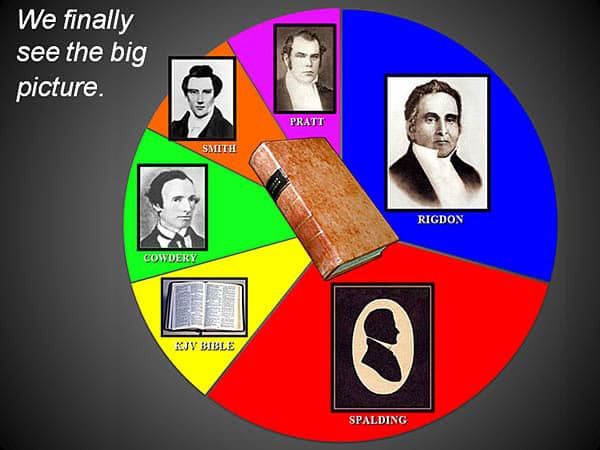
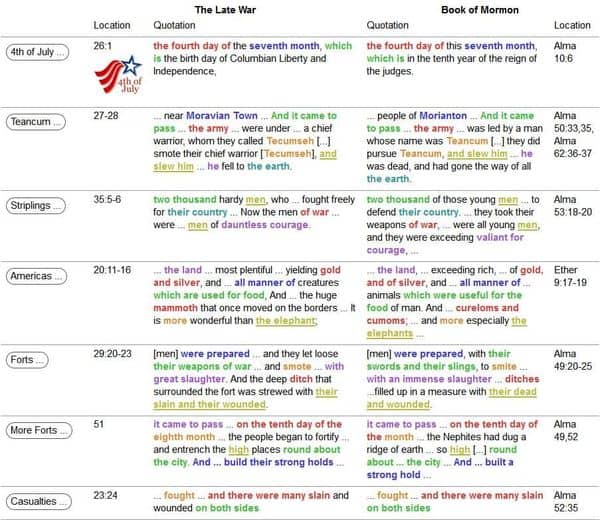
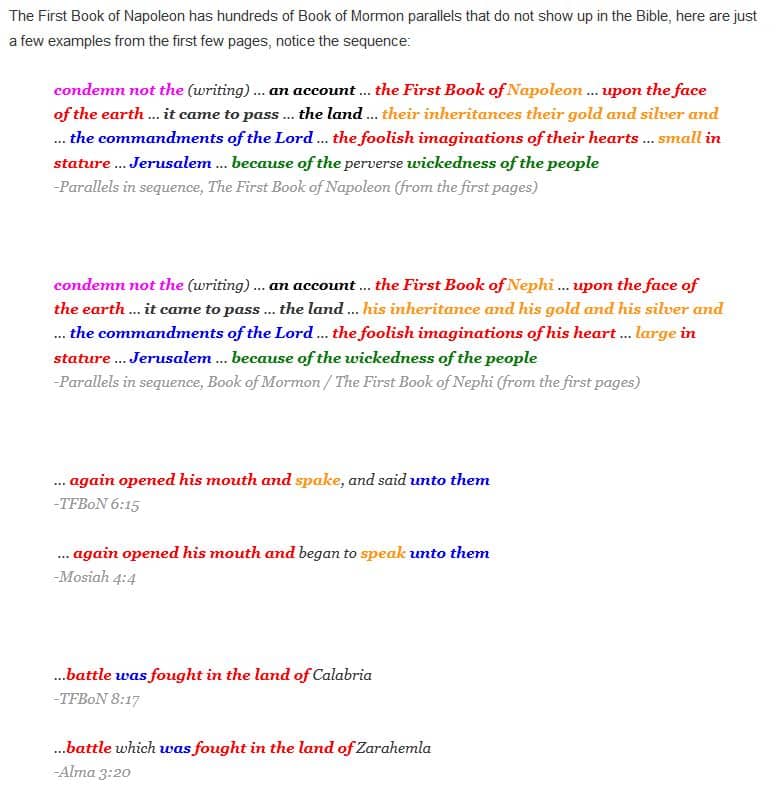
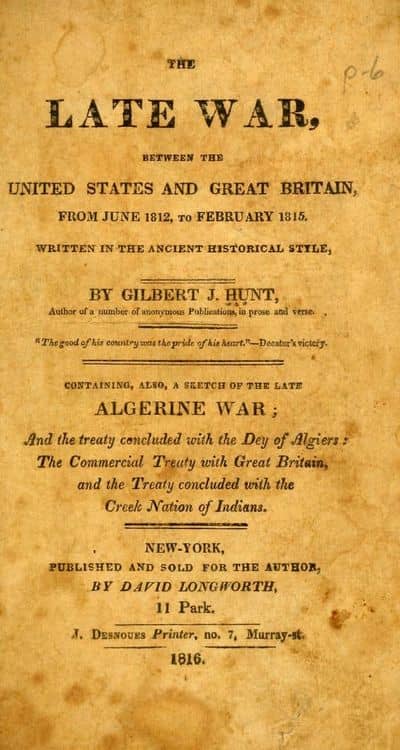
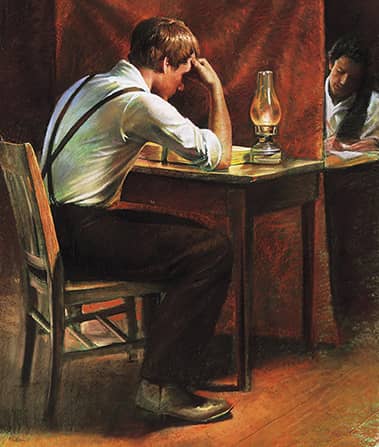
 RSS
RSS